 blog
Is Myopia Control Worth It for Children?
Table of Contents
- What Myopia Control Means and Why It Matters
- Myopia Control Lenses for Kids: How They Work
- Myopia Management Options for Children
- When to Start Myopia Control in Children
- Cost of Myopia Control for Children: What to Expect
- Treatment Effectiveness and What the Evidence Shows
- Making the Decision: Is Myopia Control Right for Your Child?
- Frequently Asked Questions
Last Updated: October 16, 2026
What Myopia Control Means and Why It Matters
Myopia control is a set of treatments designed to slow how quickly a child's nearsightedness worsens over time.
For many children, myopia progresses rapidly during school years, meaning stronger prescriptions each year and ongoing expense. This raises a critical question: is myopia control worth it for children, and is slowing that progression worth the investment?
How myopia progression affects long-term eye health
Myopia doesn't just mean stronger glasses. High myopia, typically stronger than -6.00 diopters, carries real long-term eye-health risks, so slowing progression during growth years can mean a significantly lower final prescription by adulthood.
The risks of high myopia
High myopia increases the risk of several sight-threatening conditions:
- Retinal detachment, the retina can separate from the back of the eye, potentially causing vision loss
- Glaucoma, increased eye pressure damages the optic nerve over time
- Myopic maculopathy, degeneration of the central retina, affecting detailed vision
These conditions can cause permanent vision loss if not caught early, which is why slowing progression in childhood is a long-term investment in eye health.
Myopia Control Lenses for Kids: How They Work
Myopia control lenses are the most widely available treatment option. These specialty contacts and glasses use specific optical designs to slow how the eye elongates, the primary driver of myopia progression.
Multifocal contact lenses and specialty designs
Multifocal contact lenses create multiple zones of vision correction across the lens surface. The outer zones are deliberately under-corrected, signaling the eye to slow its elongation, a mechanism called peripheral defocus.
These lenses come in two main types:
- Soft multifocal contacts, daily wear or extended wear options that provide comfortable vision correction while slowing progression
- Rigid gas-permeable (RGP) multifocals, harder lenses that offer sharper vision and may provide slightly better progression control, though they require a longer adjustment period
Day-to-day care matters: children must learn proper insertion, removal, and cleaning, and for those under 10 this often falls on parents. Lenses only work when worn consistently.
Orthokeratology and overnight lenses
Orthokeratology, or ortho-k, uses rigid contact lenses worn overnight that gently reshape the cornea, correcting myopia temporarily so the child has clear daytime vision without correction. Progression control appears comparable to daytime multifocal lenses, but ortho-k requires strict nightly wear and meticulous care.
Myopia Management Options for Children
Beyond specialty lenses, several other approaches show evidence for slowing myopia progression, used alone or combined with lens-based treatments.
Low-dose atropine drops
Low-dose atropine (typically 0.01%) is applied as eye drops once daily, usually in the evening, and appears to slow myopia progression through effects on the retina and eye growth. The advantage is simplicity: one drop per day, no lenses to manage. The disadvantage is that atropine doesn't correct vision, so glasses or contacts are still needed during the day.
Outdoor time and behavioral modifications
Time outdoors appears protective against myopia progression: children who spend more time in natural sunlight show slower progression, though the exact mechanism isn't fully understood.
Behavioral changes include:
- Increasing outdoor activity to at least 2 hours daily
- Taking regular breaks from near work (the 20-20-20 rule: every 20 minutes, look at something 20 feet away for 20 seconds)
- Maintaining proper viewing distances during reading and screen time
These changes cost nothing and carry no side effects. They're worth implementing regardless of other treatment choices.
When to Start Myopia Control in Children
Timing depends on several factors, and there's no single "right" age for all children.
Age of onset and family history considerations
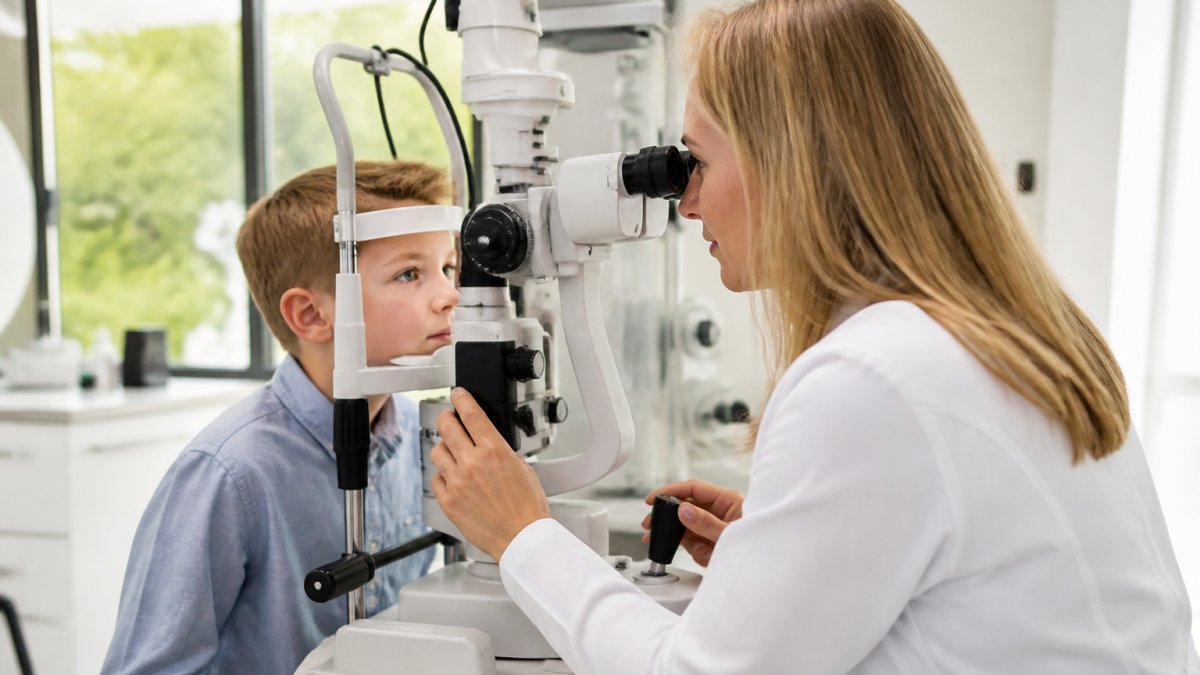
Children who develop myopia earlier typically progress faster: a child diagnosed at age 6 has more years of progression ahead than one diagnosed at 12, making early onset one of the strongest indicators for treatment. Family history matters too; if both parents have high myopia, their children are at substantially higher risk.
Cost of Myopia Control for Children: What to Expect
Cost is often the deciding factor for families. Here are realistic ranges and how the total compares against standard glasses over the same period.
Typical price ranges for each option
- Follow-up visits: most treatment plans include visits every three to six months to measure axial length or refraction. Each visit commonly runs $75 to $200 out of pocket if not covered.
Total cost compared with standard glasses
A single pair of glasses may seem less expensive than myopia control options initially. However, when considering the potential for ongoing prescription changes and the long-term risks associated with high myopia, the overall financial picture can shift. Myopia control aims to slow progression, which may reduce the frequency of prescription changes, keep the final prescription lower, and potentially reduce the likelihood of high-myopia complications that carry their own long-term costs.
Insurance, HSA/FSA, and what to ask
Coverage for myopia control is inconsistent. Some vision plans cover specialty contacts at the same rate as standard contacts, with the patient paying the difference; others exclude them as "not medically necessary." Low-dose atropine may fall under a medical benefit rather than a vision benefit, depending on how the prescription is written and categorized.
Practical steps that help:
- Ask whether the plan distinguishes between "medically necessary" and "elective" contact lenses, and which category myopia control lenses fall into.
- Ask about the frequency limit, many plans allow one lens supply per year, which may not match a daily disposable schedule.
- Check whether your HSA or FSA can be used. Vision-related expenses, including contact lenses, solutions, and prescription glasses, are generally eligible, and some plans allow atropine as a prescription expense.
At See Clearly Florida, we are not limited to specific insurance networks, giving families more flexibility in applying their benefits. We can submit claims on your behalf and walk through expected costs before treatment begins.
Questions to ask before you pay
- What is the total first-year cost, itemized?
- What is the expected ongoing annual cost after the first year?
- Is there a payment plan or a bundled pricing option? (Source: a 2023 study published in JAMA Ophthalmology)
Getting these answers in writing turns a vague "it depends" into a number you can plan around.
Treatment Effectiveness and What the Evidence Shows
Understanding what myopia control actually delivers is essential to an informed decision.
Realistic progression reduction rates
Myopia control treatments don't stop progression entirely, they slow it. Most treatments reduce the rate of progression by roughly 40 to 70 percent compared to no treatment, so a child who would progress 1.00 diopter per year might progress only 0.30 to 0.60 diopters with treatment.
Individual variation and treatment adherence
Not every child responds equally. Factors include:
- How quickly myopia was progressing before treatment
- Age when treatment starts (earlier intervention may be more effective)
- Consistency of treatment use (skipped doses or missed nights reduce effectiveness)
Adherence is critical: a child who wears ortho-k only 4 nights per week, or frequently forgets atropine drops, won't see the full benefit. This matters when evaluating whether a treatment fits your family's lifestyle.
Making the Decision: Is Myopia Control Right for Your Child?
What follows is a practical framework: the factors that should drive the decision, the questions worth asking a clinician, and the signals that suggest it is time to start, adjust, or stop.
A decision framework based on your child's profile
The decision is easier when you separate measurable factors from estimates.
Factors that push toward starting treatment:
- Early onset. A child diagnosed before age 10 has more growing years ahead and typically progresses faster than a child diagnosed in the teens.
- Fast progression. A change of 0.50 diopters or more in a year, or measurable axial length growth, is a strong signal that the eye is still elongating quickly.
- Family history. One or both parents with high myopia raises the child's risk of reaching a high prescription.
Factors that may justify waiting or choosing a lighter approach:
- Very slow progression, less than about 0.25 diopters per year, with a low current prescription.
- A child who is not yet mature enough to manage lenses or drops safely, where the risk of poor hygiene or inconsistent use outweighs the benefit.
- A family that cannot commit to the follow-up schedule, since monitoring is what makes treatment safe and adjustable.
Questions to ask your eye-care professional
Bring these to the exam; the answers tell you whether the practice tracks outcomes or just sells a product.
- What is my child's current prescription, and what is the measured axial length?
- How much did the prescription change over the last 12 months?
- Based on that rate, what final prescription would you expect without treatment?
A clinician who measures axial length, not just refraction, and who sets a review point to reassess is giving you the information you need to judge value.
Trade-offs by option, in plain terms
- Soft multifocal contacts: good vision correction and progression control in one device, but daily handling, cleaning, and replacement. Younger children need a parent to supervise insertion and hygiene. Risk of infection rises with overnight wear or poor cleaning.
- Ortho-k: no daytime glasses or contacts, which many active kids prefer, but nightly wear is non-negotiable and lens care must be meticulous. Missing nights reduces effect, and there is a small risk of corneal irritation or infection if hygiene slips.
- Glasses alone: lowest cost and lowest burden, but standard single-vision glasses do not slow progression. Specialty myopia control spectacle lenses exist and are an option for families who want a non-contact approach, though the effect size is generally smaller than with contacts or atropine.
When to continue, adjust, or stop
Treatment is not set-and-forget. Review it at least every six months based on measured change, not on how the child feels about the lenses.
Continue if progression has slowed compared with the pre-treatment rate and the child is tolerating the treatment without recurring problems.
Adjust if progression continues at or near the previous rate.
What happens when treatment stops
This is one of the most misunderstood parts of myopia control. The effect is generally not permanent.
- Ortho-k: the cornea returns to its original shape within days of stopping, and the refractive correction disappears with it.
- Multifocal contacts and atropine: progression tends to resume at roughly the previous rate once treatment ends. Some studies suggest a short period of faster-than-usual progression, sometimes called rebound, after stopping atropine, which is one reason clinicians often taper rather than stop abruptly.
- Outdoor time and near-work habits: these are the exception. The habits themselves persist, and the associated benefit does not disappear when a device is removed.
Because the effect is tied to active treatment, the typical plan is to continue through the fastest-progression years, often into the mid-teens, then reassess. Clinicians usually stop based on a sustained slowdown across multiple visits, not a single measurement.
A short checklist before you decide
- Do I have the current prescription and the 12-month change in writing?
- Has axial length been measured, not just refraction?
- Do I know the first-year and ongoing annual cost for the recommended option?
If you can answer all six, you have enough information to make a decision you can revisit rather than one you must get right the first time.
Frequently Asked Questions
What is the most effective treatment for myopia in children?
Multifocal contact lenses, orthokeratology (overnight lenses), and low-dose atropine drops have shown effectiveness in slowing myopia progression. Studies indicate these treatments can reduce progression by 40 to 70 percent depending on the option and the individual child. Multifocal lenses are often preferred for younger children because they're easier to manage daily. Orthokeratology works overnight while your child sleeps, correcting vision temporarily. Low-dose atropine requires daily application but has minimal side effects. A comprehensive eye exam with an optometrist can determine which option suits your child's lifestyle and prescription.
At what age should a child start myopia control?
Myopia control is most effective when started early in childhood, ideally between ages 6 and 12, when myopia typically begins or is progressing rapidly. Children diagnosed with myopia at a younger age or those with a family history of high myopia are candidates for early intervention. Starting treatment during these formative years can significantly reduce the risk of developing high myopia later, which carries greater risk for serious eye conditions like retinal detachment and glaucoma. An eye examination is the first step to determine if your child is a candidate.
How much does myopia control cost for a child?
Costs vary significantly depending on the treatment option chosen. Specialty contact lenses, orthokeratology, and low-dose atropine each have different pricing structures. Insurance coverage varies by plan; some vision plans cover portions of myopia management, while others do not. Many families find that investing in myopia control early can reduce long-term costs by slowing progression and potentially avoiding more expensive vision corrections or treatments for advanced myopia complications later. For current pricing and insurance coverage details, contact an eye care provider directly for a personalized quote.
Are myopia control lenses worth it if my child already wears regular glasses?
Myopia control lenses offer advantages beyond regular glasses by actively slowing prescription progression, whereas regular glasses simply correct current vision without addressing the underlying progression. If your child's prescription is increasing noticeably year to year, myopia control can reduce that rate and lower the risk of high myopia in adulthood. The decision depends on your child's progression rate, family history, lifestyle, and willingness to use specialty contact lenses or other treatments consistently. A consultation with an eye care professional can help you weigh whether the benefits justify the investment for your specific situation.