 blog
How to Choose Between a Pediatric Eye Screening and a Full Exam
Quick Summary
A pediatric eye screening is a quick check of distance vision, eye alignment and sometimes the red reflex, meant to flag children who need a closer look. A comprehensive pediatric eye exam is a full evaluation by an eye doctor that adds focusing, eye teaming and eye health checks. A pass on a screening is reassuring but not final.
- A pediatric eye screening takes only a few minutes and is often done by a school nurse or pediatrician.
- Screenings can miss farsightedness, astigmatism and eye teaming problems.
- A comprehensive exam typically takes 30 to 60 minutes and often includes dilation.
- A comprehensive exam provides a prescription and treatment plan when needed.
- A failed screening or referral should lead to a comprehensive exam, not a repeat screening.
Table of Contents
- What a Pediatric Vision Screening Checks and What It Misses
- What a Comprehensive Pediatric Eye Exam Includes
- Side-by-Side: Screening vs Comprehensive Exam
- Pediatric Vision Screening Guidelines by Age
- Understanding Child Vision Screening Results: Pass, Fail, and Next Steps
- How a School Vision Screening Test Fits Into Your Child's Eye Care
- Getting an Eye Exam for Kids Without Insurance and Preparing for a First Visit
- Frequently Asked Questions
What a Pediatric Vision Screening Checks and What It Misses
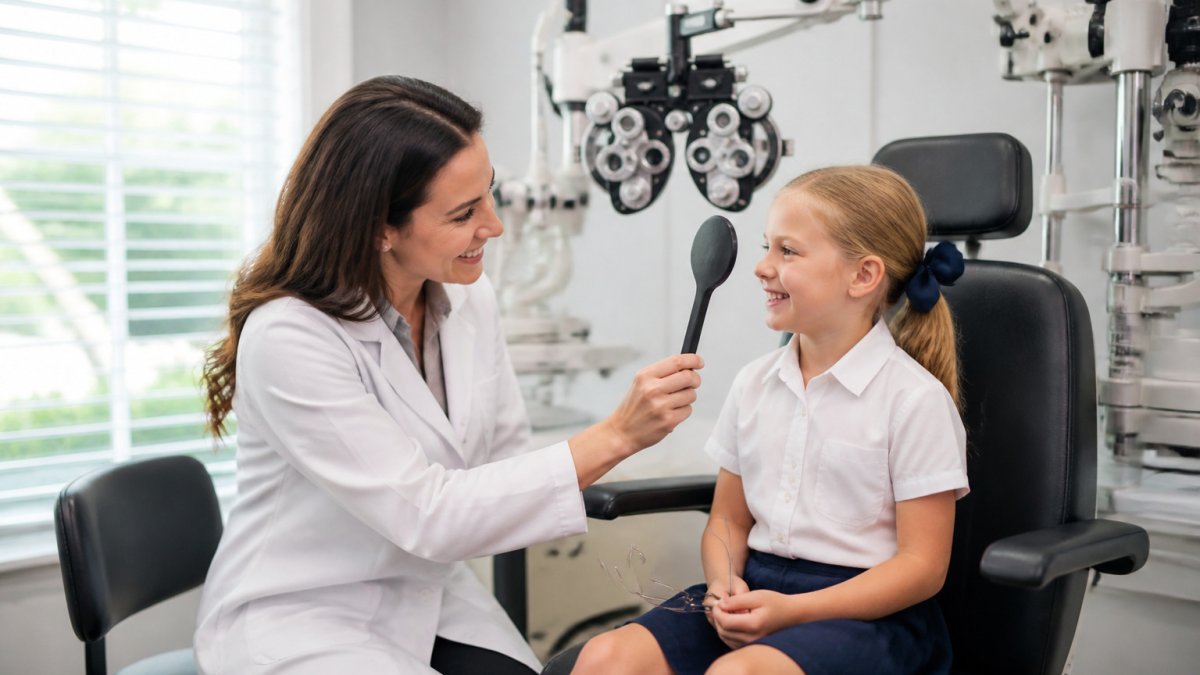
A pediatric vision screening is a quick check, and a form of pediatric eye screening, designed to flag children who may need a closer look. Most screenings measure visual acuity at distance, check how the eyes align, and sometimes look at the red reflex in the pupil. It takes only a few minutes, which makes it useful for schools, pediatricians and busy families.
Screenings are built to catch the most obvious problems, not to diagnose them. A child can pass a screening and still have a condition that affects learning or comfort. Common examples include farsightedness, astigmatism and eye teaming problems, since some of these may not reduce distance vision enough to fail a basic test.
The American Academy of Pediatrics explains that screening is not a substitute for a full evaluation American Academy of Pediatrics vision screening guidance. Parents should treat a pass as reassuring but not final, especially if they notice symptoms such as squinting, headaches, or trouble reading.
What a Comprehensive Pediatric Eye Exam Includes
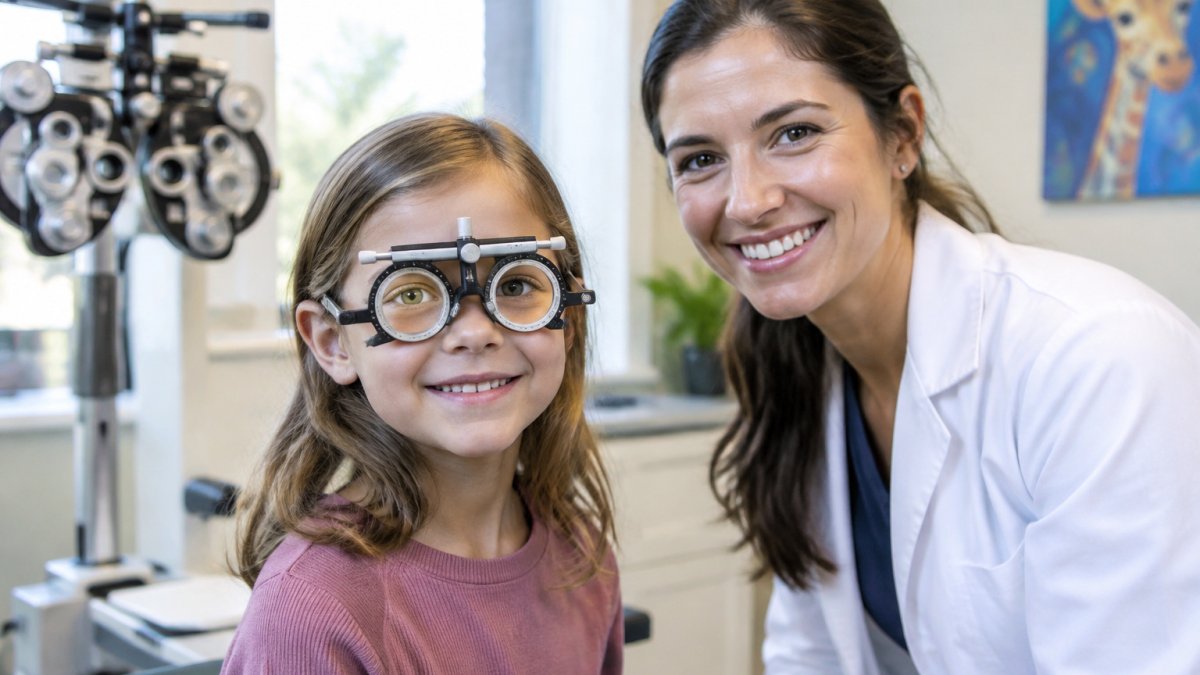
A comprehensive pediatric eye exam is a full evaluation by an eye doctor, going further than a routine pediatric eye screening. It goes well beyond reading letters on a chart. The doctor checks visual acuity at several distances, measures refractive error, and tests how well the eyes focus, track and work together as a team.
The exam also includes a health check of the eye itself. This may involve dilating the pupils so the doctor can see the retina and optic nerve. Dilation is a standard part of many pediatric exams, and it helps detect problems that a screening cannot see.
For younger children, the doctor adapts the exam to what the child can do. Preschoolers may look at pictures or shapes instead of letters. Eye doctors use these methods because accurate results matter for treatment decisions, especially during the years when vision is still developing.
Side-by-Side: Screening vs Comprehensive Exam
The two options serve different purposes. Here is how they compare:
| Feature | Vision Screening | Comprehensive Exam |
|---|---|---|
| Who performs it | School nurse, pediatrician, trained screener | Optometrist or ophthalmologist |
| Time required | A few minutes | Typically 30 to 60 minutes |
| Eye health check | Limited | Full evaluation, often with dilation |
| Prescription | Not provided | Provided when needed |
| Best for | Flagging possible problems | Diagnosis and ongoing care |
Pros of a screening:
- Quick
- Useful for catching obvious vision problems early
- Available through schools and pediatric offices
Cons of a screening:
- Can miss farsightedness, astigmatism and eye teaming problems
- Cannot confirm a diagnosis or prescribe glasses
- A fail result still requires a follow-up exam
Pros of a comprehensive exam:
- Detects a wider range of conditions
- Provides a prescription and treatment plan when needed
- Establishes a baseline for future comparison
Cons of a comprehensive exam:
- Takes longer than a screening
- Requires scheduling and travel
- Young children may need extra patience during testing
Pediatric Vision Screening Guidelines by Age
Most parents do not need another reminder that screening and a full exam are different. They need a timeline: at which ages is a screening the expected step, and at which ages should a comprehensive exam happen even if every screening has passed? The two schedules run on parallel tracks, and the child's age and risk level decide which track leads.
Newborn to 12 months. The first checks happen in the hospital and at well-child visits. The pediatrician looks at eye alignment, the red reflex, and how the eyes follow a target. A comprehensive exam by an eye doctor is recommended when a newborn was born premature, has a family history of retinoblastoma, congenital cataracts, or metabolic disease, or when the pediatrician sees something that needs a closer look. Otherwise, routine well-child screening is the norm at this stage.
1 to 3 years. Instrument-based screening, a handheld device that estimates refractive error without the child reading anything, is increasingly used at this age because it works on toddlers who cannot name letters. Photoscreening and autorefraction are the common methods. A referral from one of these devices is not a diagnosis; it is a signal to book a comprehensive exam. Children with a failed screening, a known developmental delay, or a strong family history of early glasses wear should see an eye doctor rather than repeat the screening.
3 to 5 years. This is the window when amblyopia (lazy eye) is most treatable, so it is the age when a comprehensive exam has the highest payoff. Many practitioners recommend at least one full eye exam before kindergarten, even for a child who passed every pediatrician screening. Visual acuity testing with picture or matching symbols becomes reliable around age 3 to 4, and the exam can then check acuity, alignment, refractive error, and eye health in one visit.
5 to 12 years. School screenings typically happen in kindergarten or first grade and again in later elementary grades, depending on the district. A screening at school is a snapshot; it does not replace the comprehensive exam a child should have at least once in this range, and more often if the child wears glasses, has a strong family history of myopia, or shows symptoms.
12 to 18 years. Screenings continue in some schools, but teenagers are the group most likely to skip routine eye care because they do not report symptoms. A comprehensive exam every one to two years is a common pattern, especially for students who wear contact lenses, play sports, or spend long hours on screens.
A screening schedule and an exam schedule are not interchangeable, so ask your pediatrician's office which one they are doing. Ask the office which one they are doing so you do not assume a screening covered the same ground.
Guidelines are updated periodically, so confirm current recommendations with the American Academy of Pediatrics, the American Optometric Association, or the child's doctor before relying on any single schedule American Academy of Pediatrics vision screening guidance American Optometric Association children's eye care guidance.
Understanding Child Vision Screening Results: Pass, Fail, and Next Steps
Screening results come in more than two flavors, and the label on the paper matters less than what you do next. Here is how to read the common outcomes and turn each one into a concrete next step.
Pass. The child met the screening criteria on that day. A pass is reassuring, but it is not a diagnosis of healthy vision. Screenings are designed to catch the most common problems, and a child can pass while still having farsightedness, astigmatism, or an eye teaming problem that does not reduce distance acuity enough to fail.
Fail. A fail means the child did not meet the criteria on one or more tests. It is a signal, not a diagnosis. Many children who fail a screening turn out to have a refractive error that is easily corrected with glasses; others have an eye teaming or focusing issue that needs a full evaluation.
Referral or 'cannot test.' Some screening reports use 'referral' rather than 'fail,' and some use 'untestable' or 'incomplete.' These are not the same.
How soon to book. A common pattern is to schedule a comprehensive exam within a few weeks of a failed screening or referral. Move faster, within days, if the screening noted eye turning, unequal pupils, a white glow in the pupil, or a sudden change in vision, or if the child has eye pain, redness, or discharge.
What to bring to the follow-up exam. Bring the screening report, a list of current medications, any family history of eye conditions (especially strabismus, amblyopia, or childhood glasses), and notes on any symptoms you have noticed at home. If the child wears glasses or contacts, bring them. If the child had a recent illness or eye injury, mention it.
Why a pass does not close the file. Screening methods have real limits. Acuity charts depend on the child's attention and cooperation; instrument-based screeners estimate refractive error but do not evaluate eye health or eye teaming in depth.
Watch out: do not treat a 'cannot test' result as a pass just because no problem was named. An untestable screening leaves the question open, and the child still needs a full evaluation to answer it.
If the follow-up exam finds a refractive error, the doctor will discuss glasses and a recheck schedule. If it finds an eye health or eye teaming issue, the doctor will explain the treatment plan and how often to return. Either way, the screening did its job: it moved the child from a quick check to the right level of care.
How a School Vision Screening Test Fits Into Your Child's Eye Care
School screenings serve as an early warning system. They reach many children who might otherwise go unchecked. Their role works best when parents treat the result as a starting point for care rather than a final answer.
Think of the screening as one step in an ongoing relationship with an eye doctor. A child who passes a school screening still benefits from routine comprehensive exams as vision develops and as school demands increase.
Getting an Eye Exam for Kids Without Insurance and Preparing for a First Visit
Families without insurance often worry about cost. Pricing depends on the practice, the exam type and any add-on services, so ask the office for current fees before booking. Ask the office about self-pay options and what is included in any exam fee.
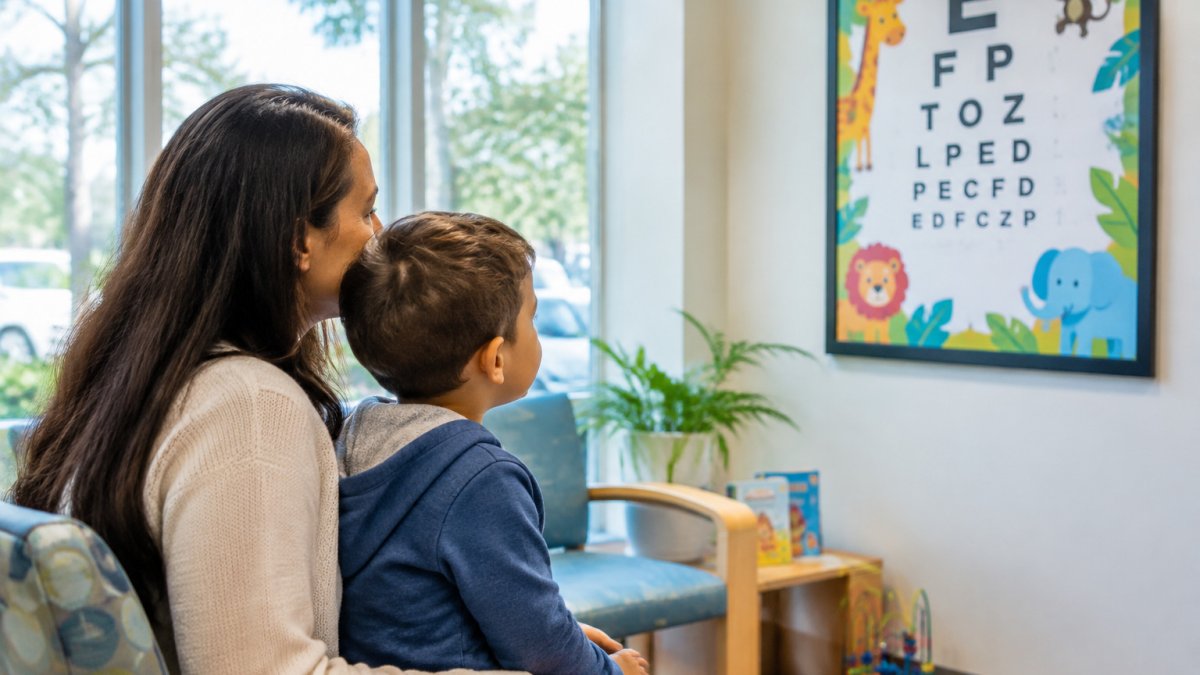
Preparing for the first visit can make it easier for everyone. Bring a list of current medications, any family history of eye conditions, and the school screening report if one exists. Let the child know what to expect in simple terms, and bring a favorite toy or book for the wait. Plan for dilation if it is part of the exam, since vision may be blurry afterward and sunglasses can help on the way home.
Families can book a first visit to have their child's vision evaluated and discuss next steps with an eye care professional.
Frequently Asked Questions
What is the difference between a vision screening and a comprehensive eye exam?
A vision screening is a quick check, often done at school or a pediatrician's office, that looks mainly at visual acuity and a few warning signs such as eye alignment. It can flag a possible problem but cannot diagnose it or prescribe glasses. A comprehensive eye exam is performed by an optometrist or ophthalmologist and evaluates focusing, eye teaming and tracking, refractive error, eye health and the internal structures of the eye, often with dilation. If a screening result is abnormal, the next step is a full exam, not a repeat screening.
What is the ideal age for a child's first comprehensive eye exam?
Current pediatric eye care guidance generally recommends a first comprehensive exam during infancy or early childhood, with additional visits before school entry and then at regular intervals while the child is growing. Children with risk factors such as premature birth, a family history of eye disease, a known eye turn, or a failed screening should be seen sooner. Your pediatrician or an eye care professional can confirm the schedule that fits your child.
Can a child pass a vision screening and still have an eye problem?
Yes. A screening measures only a limited set of functions over a short period, so it can miss refractive errors that do not reduce distance acuity, problems with eye teaming or focusing, and some eye health conditions. This is why a passed screening does not replace a comprehensive exam when a child has symptoms such as squinting, headaches, eye rubbing, or trouble reading and concentrating.
What should parents do if a child fails a school vision screening?
Do not wait for the next routine check. Schedule a comprehensive pediatric eye exam promptly, bring the screening referral slip, and share any symptoms you have noticed at home or in class. Many schools give a referral letter that explains what was flagged. An eye care professional can then determine whether glasses, further testing or monitoring is needed.