 how-to
How to Use FSA for Prescription Sunglasses: A Guide
Table of Contents
- FSA Eligible Prescription Sunglasses: What Qualifies
- Using Your FSA Card for Prescription Sunglasses
- FSA Reimbursement for Eyewear: How to Submit a Claim
- Plan Rules, Deadlines, and Edge Cases
- How to Use FSA for Prescription Sunglasses: Quick Recap
- Frequently Asked Questions
Last Updated: October 5, 2026
FSA Eligible Prescription Sunglasses: What Qualifies
A flexible spending account (FSA) lets you set aside pre-tax money for certain health costs, and prescription sunglasses often count when they correct your vision. (Source: IRS Publication 502 on medical and dental expenses)
The key rule: the lenses must correct a vision problem, so you need a current prescription from an eye exam.
Prescription sunglasses qualify because they correct your vision and block UV rays.
Typically qualifying: prescription sunglasses, eyeglasses (including readers), safety and sports goggles, and prescription computer glasses. Usually not covered: plain non-prescription sunglasses, fashion frames without a prescription, and sunglasses bought without an eye exam.
The rules come from IRS guidance on qualified medical expenses. You can review the details at the IRS Publication 502 on medical and dental expenses.
Using Your FSA Card for Prescription Sunglasses
You can usually pay for prescription sunglasses at checkout with your FSA card if the purchase is a qualified medical expense.
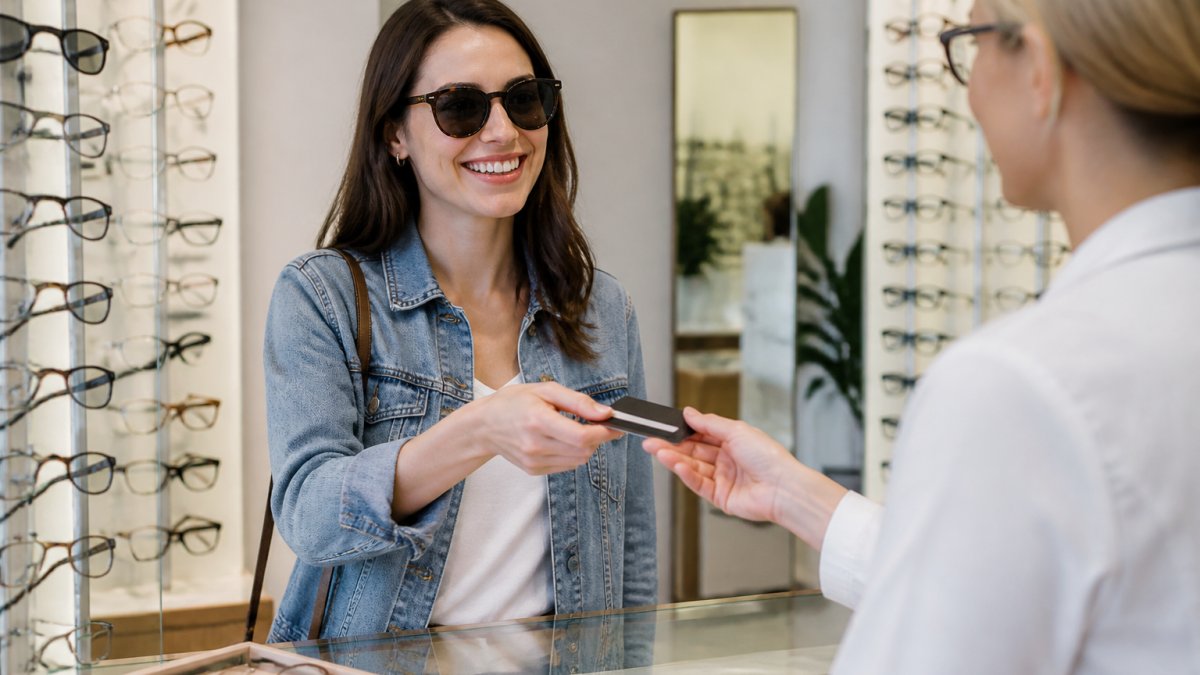
The process: get an eye exam and written prescription, pick frames and prescription lenses, then pay with your FSA card or out of pocket and submit a claim later. Keep the itemized receipt showing the prescription lenses; your card may only cover the eligible portion, and some plans require a claim instead.
FSA Reimbursement for Eyewear: How to Submit a Claim
If your card won't cover the purchase or you paid out of pocket, request FSA reimbursement for eyewear by submitting a claim to your plan administrator.
To submit a claim: gather your itemized receipt and vision prescription, log into your plan administrator's portal or download a claim form, fill in the date, amount, and a short description, upload or mail the documents, then wait for review and reimbursement. Keep the itemized receipt, prescription copy, purchase date and amount, and any claim confirmation number on file.
If a claim is denied, ask why in writing. Common reasons include a missing prescription or a receipt that doesn't separate lenses from frames, often fixable and resubmittable.
Plan Rules, Deadlines, and Edge Cases
Every plan runs on its own rules. Watch for use-it-or-lose-it year-end spending, limited carryover, grace periods, and claim deadlines that differ from spending deadlines.
| Situation | What to Check | Why It Matters |
|---|---|---|
| Year-end balance | Plan year end date | Unused funds may be lost |
| Leftover funds | Carryover or grace period | You may keep some balance |
| Paid out of pocket | Claim deadline | Miss it and you lose the refund |
Edge cases: you can often use vision insurance first, then pay your out-of-pocket cost with FSA funds; with a discount, you can only claim what you actually paid; a backup pair of prescription glasses or sunglasses can qualify if it meets a vision need; and prescription glasses for a child usually qualify with a valid prescription.
For the official rules on how FSAs work, see the IRS guidance on flexible spending arrangements.
How to Use FSA for Prescription Sunglasses: Quick Recap
The short version: get an eye exam, keep your prescription, pay with your FSA card or file a claim, and save your receipts. That covers how to use FSA for prescription sunglasses from start to finish. Prescription sunglasses qualify while plain sunglasses usually don't, so keep an itemized receipt and a current prescription, know your plan's deadlines, and check with your plan administrator if unsure.
Sorting out FSA rules and vision prescriptions can feel like a lot to juggle. See Clearly Florida offers comprehensive eye exams, personalized eyewear recommendations, and claims submitted on your behalf, all backed by a patient portal for quick access to your records and prescriptions. We're not limited to specific insurance networks, so you can use your benefits with more flexibility. Schedule now with See Clearly Florida and get the most from your vision benefits.
Frequently Asked Questions
Will my FSA cover prescription sunglasses?
Yes. Prescription sunglasses count as a qualified medical expense when the lenses correct your vision, so FSA funds can pay for them. The frames and lenses must be prescribed, and you may need a copy of your vision prescription and an itemized receipt. Non-prescription sunglasses do not qualify. If you have an HSA or FSA, check your plan rules to confirm how prescription eyewear is handled before you buy.
What documentation do I need to submit an FSA claim for prescription sunglasses?
Keep an itemized receipt showing the provider, date, and a breakdown of the frames and lenses, plus your written vision prescription. A card receipt alone often is not enough because it may not prove the eyewear is prescription. If your FSA card was declined at checkout, you can pay out of pocket and submit a claim for reimbursement with those documents. Store copies in case your plan administrator asks for them later.
Can I use FSA funds for prescription sunglasses bought online?
You can, as long as the retailer provides a valid prescription and issues an itemized receipt that separates the prescription lenses from the frames. Some online sellers label orders clearly for FSA use; others do not, which can lead to a denied claim. Before ordering, confirm the site accepts your FSA card or will give you documentation for reimbursement. If the receipt is vague, ask for a detailed version.