 How-to
When Should a Child Have Their First Eye Exam
Quick Summary
A child should have their first eye exam by around six months of age, performed by an eye doctor, with a preschool exam at ages 3 to 5 and another before kindergarten or first grade. Children with risk factors such as premature birth or a family history of eye problems may need to start even earlier. A first eye exam checks for problems that can affect vision development and may not produce obvious symptoms.
- Have a comprehensive eye exam by around six months of age with an eye doctor.
- Schedule a preschool comprehensive exam between ages 3 and 5.
- Get a school-entry exam before kindergarten or first grade.
- Children with risk factors need to start earlier and be seen more often.
- A passed pediatrician vision screening does not replace a comprehensive eye exam.
Table of Contents
- Why a Child's First Eye Exam Matters More Than Most Parents Expect
- Recommended Ages for a Child's First Comprehensive Eye Exam
- Pediatric Vision Screening Guidelines and Why Recommendations Differ
- When Kids Need Eye Exams for School
- How to Prepare for Your Child's First Eye Exam by Age
- Reading Child Vision Screening Results and What Comes Next
- Getting an Eye Exam for Your Child With No Insurance
- Booking Your Child's First Eye Exam at See Clearly Florida
- Frequently Asked Questions
Why a Child's First Eye Exam Matters More Than Most Parents Expect
Most parents assume that if their child can see well enough to read a storybook, their eyes are fine. That assumption is often wrong. Many vision problems in children cause no obvious symptoms, and a child who has never known clear vision may not realize something is off. A comprehensive eye exam is the way to find those problems early, when treatment tends to work best. (Source: National Eye Institute's resources on amblyopia)
When should a child have their first eye exam? For most children, the answer is earlier than parents expect, and the timing depends on the child's age and any risk factors. The sections below explain the recommended ages, how screening differs from a full exam, and what to do next.
Here is the key point: vision develops during the first years of life. Eyes must learn to work together, focus and track objects. When a problem goes untreated during this window, it can become harder to correct later. That is why a first exam is about more than checking whether a child needs glasses.
Recommended Ages for a Child's First Comprehensive Eye Exam
The reason parents hear three different answers, six months, ages 3 to 5, or before kindergarten, is that these recommendations describe different exams for different purposes, not competing opinions about the same visit. Once you separate them, the schedule stops looking contradictory.
The six-month exam is an infant comprehensive eye exam. Professional guidance from pediatric eye care organizations recommends that every healthy infant have a comprehensive eye exam by around six months of age, performed by an eye doctor rather than a pediatrician. At this age the doctor is checking that the eyes are structurally healthy, that they align and move together, and that the baby is fixing and following with each eye. This is the exam that catches conditions like a constant eye turn, a congenital cataract, or a large difference in prescription between the two eyes, problems that can permanently blunt vision if they are not addressed during the first year or two.
The 3-to-5 exam is a preschool comprehensive eye exam. This visit checks visual acuity with picture or matching tests, measures focusing and eye alignment, and confirms that both eyes are contributing to vision. It is timed to catch amblyopia (lazy eye) and significant refractive error before a child starts school, when reading demands rise sharply.
The before-school exam is a school-entry comprehensive eye exam. Many practitioners recommend a full exam in the year before kindergarten or first grade, even if the child passed a pediatrician's screening.
In practice, a typical schedule for a healthy child with no risk factors looks like this:
- By 6 months: First comprehensive eye exam with an eye doctor
- Ages 3 to 5: Preschool comprehensive exam
- Before kindergarten or first grade: School-entry comprehensive exam
- Every one to two years after that: Routine exams, or yearly if the child wears glasses or has a diagnosed condition
Children with risk factors need to start earlier and be seen more often. Risk factors include premature birth, a family history of amblyopia, strabismus, or childhood glasses, a visible eye turn, developmental delay, or a known systemic condition associated with eye problems.
A common pattern is that parents wait until a child can read letters on a chart. That is a mistake. The six-month and preschool exams are designed precisely for children who cannot yet read a chart, and the tests are built around pictures, lights, and observation.
Watch out: a passed vision screening at the pediatrician's office is not the same as a comprehensive eye exam, and it does not replace the six-month or preschool visit (Eye Screening for Children).
Newborn screening versus a comprehensive eye exam
Newborn screening is a quick check done soon after birth, often in the hospital, to look for obvious problems such as a cataract or a blocked tear duct. It is not a full exam.
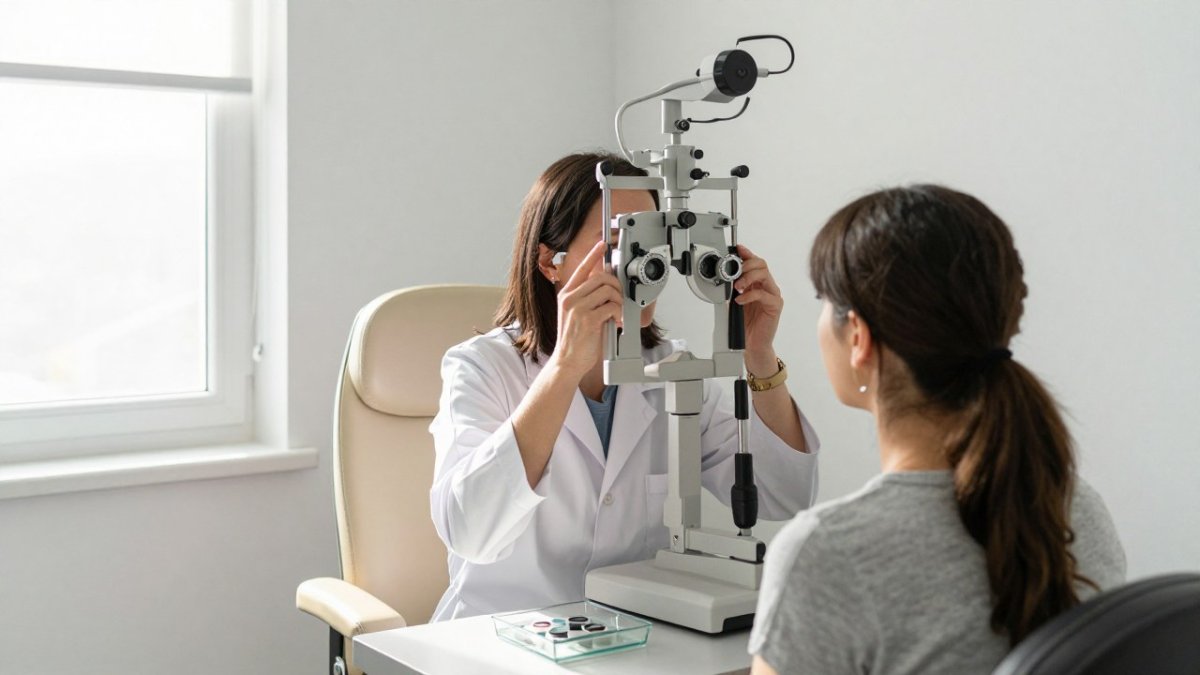
A comprehensive eye exam goes much further. The doctor checks how the eyes focus, move and work together, and may use dilating drops to see the back of the eye. Screening catches some urgent problems, but only a full exam can measure vision and detect many common conditions.
Pediatric Vision Screening Guidelines and Why Recommendations Differ
You may hear different timelines from a pediatrician, a school nurse and an eye doctor. Each comes from a different purpose. Pediatric vision screening guidelines are designed to catch problems across large groups of children, so they set a simple, broad standard. A full eye exam goes deeper for an individual child.
This is why the advice can look inconsistent. A screening test can pass a child who still needs a full exam. A child who fails a screening test should always get a follow-up exam, no matter what age they are.
When in doubt, follow the more thorough recommendation for your child, especially if there is a family history of eye problems.
When Kids Need Eye Exams for School
Many schools request proof of an eye exam before or during the first year of school, especially for kindergarten and first grade. Schools want to make sure children can see the board, the books and their own work clearly.
Reading and close work are the big demands. A child who struggles to focus up close or who avoids reading may have a vision problem that looks like a learning problem. A school-entry exam can rule out vision as the cause.
Check your school district's requirements early. Requirements can change, so confirm them directly with the school.
How to Prepare for Your Child's First Eye Exam by Age
Preparation works best when you know what the appointment will actually involve. The exam itself changes substantially by age, and so does the best way to get a child ready for it.
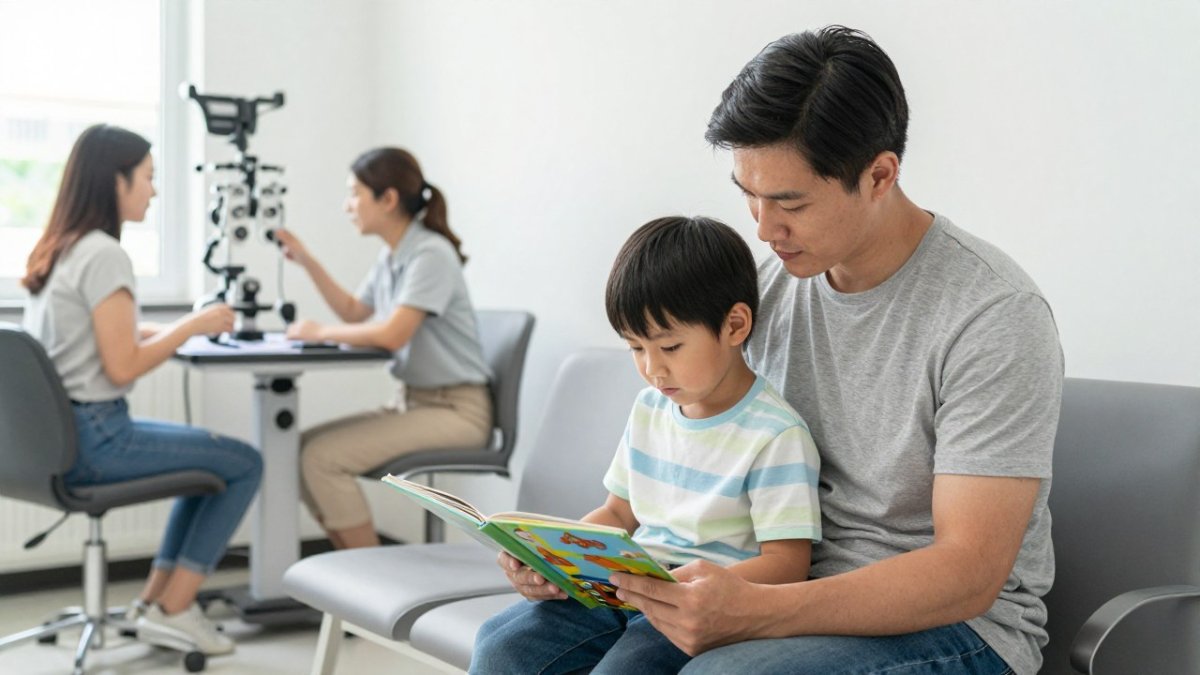
Infants (around 6 months). The exam is mostly observation and gentle handling. The doctor will watch the baby fix and follow a toy or light, check that the eyes move together in all directions, and use a handheld instrument to estimate whether each eye is focusing normally. Dilating drops may be used so the doctor can see the back of the eye and measure the prescription accurately; the drops sting briefly and blur near vision for a few hours. Schedule the visit for a time when the baby is alert and recently fed, and bring a bottle or a favorite toy. No special skills are needed from the child.
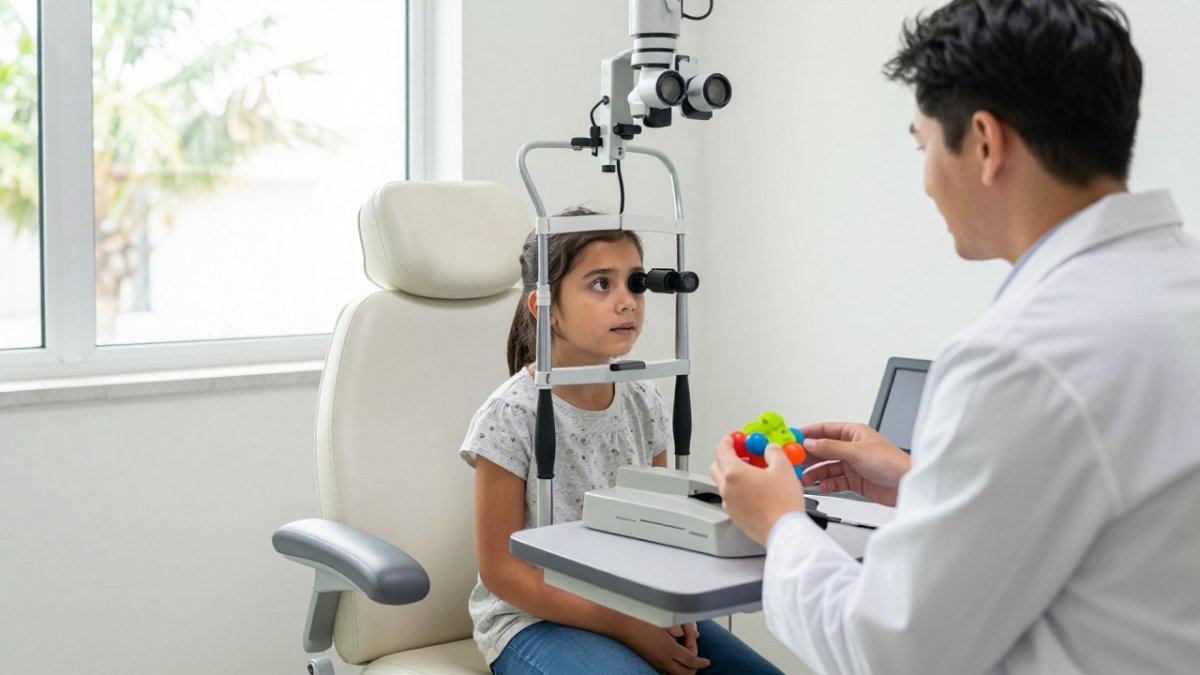
Toddlers (ages 1 to 3). The doctor will use pictures, matching cards, or a light rather than a letter chart.
Preschoolers (ages 3 to 5). This is the age when a picture-based acuity test (such as a LEA symbol or HOTV matching test) becomes possible. The child will be asked to name or match shapes, follow a light, and look through a few special lenses.
School-age children. A standard letter chart is usually possible. The exam will check acuity at distance and near, eye alignment, focusing ability, color vision, and eye health.
For every age, bring a list of current medicines, past eye problems, and family history of eye disease. If a child wears glasses or contacts, bring them. If the child has had a prior screening, bring the results.
Reading Child Vision Screening Results and What Comes Next
A screening result is a starting point, not a final answer. A "refer" or "fail" result means the child needs a full exam, not that they have a serious condition. Many children who are referred turn out to need only glasses or a routine follow-up.
Watch for these signs that suggest a child should see an eye doctor soon:
- Frequent squinting or closing one eye
- Eye rubbing or head tilting
- Eyes that seem to turn in or out
- Trouble with reading, copying or catching a ball
- Complaints of headaches or eye strain
If a child shows any of these signs, do not wait for the next routine visit. Call your eye doctor. If there is sudden loss of vision, eye pain, or a sudden change in how the eyes look, seek urgent care right away.
Getting an Eye Exam for Your Child With No Insurance
Not having vision insurance does not mean your child must go without care. Check with the office about self-pay options before the visit, since pricing depends on the exam type and any added testing.
Some families also find these options helpful:
- Ask about membership plans for ongoing eye care for individuals and families
- Check whether your state or local community offers free or low-cost child eye screening
- Ask your child's school about vision screening programs
Booking Your Child's First Eye Exam at See Clearly Florida
If your child is due for a first exam, now is a good time to book. At See Clearly Florida, our optometrists are focused on personalized, patient-centered care. Our practice is not limited to specific insurance networks, and we can help you make flexible use of your vision plan benefits.
To schedule an appointment, contact our Manatee County office. We are happy to answer questions about what to expect before the visit.
Button: Schedule Your Child's Exam Card title: Is your child due for an eye exam? Card text: See Clearly Florida offers comprehensive pediatric eye exams in Manatee County.
Frequently Asked Questions
At what age should children have their first eye exam?
Most pediatric eye care professionals recommend a child's first comprehensive eye exam at around six months of age, with another exam at about age 3 and again before starting first grade. Newborns get a screening in the hospital, but that is not a full exam. Children with risk factors such as premature birth, a family history of eye disease, or visible signs like persistent squinting or eye turn may need an earlier exam. If you are unsure, ask your pediatrician or an eye doctor for guidance based on your child's health history.
Should a 2-year-old see an eye doctor?
Yes, a 2-year-old can and should see an eye doctor if there are concerns, and many children have their first comprehensive exam by age 3. Eye doctors use child-friendly methods that do not require reading or speaking, such as tracking a light, matching pictures, or looking through a lens. Signs that a 2-year-old needs an exam sooner include frequent eye rubbing, head tilting, crossed or wandering eyes, or difficulty tracking objects. Bring a list of any concerns and your child's medical history to the visit.
Can a 3-year-old go to an optometrist?
A 3-year-old can see an optometrist, and this is a common time for a first comprehensive eye exam. At this age, the exam checks focusing, eye alignment, and visual acuity using picture charts or shapes, and it can detect conditions like amblyopia and strabismus while treatment is most effective. Parents can help by keeping the visit calm, avoiding discussion of the test as something scary, and arranging the appointment around the child's nap schedule. A school-age exam typically follows before first grade.
What should I do if my child has no insurance and needs an eye exam?
Parents without vision insurance can still schedule a child's eye exam by calling the practice and asking about self-pay options and current fees, since pricing depends on the type of exam and what is needed. Some families also look into public programs that cover children's health care, and their state's Medicaid or Children's Health Insurance Program office can explain eligibility. Ask the office to confirm current costs before the visit. See Clearly Florida is not limited to specific insurance networks, so you can ask how your vision plan benefits may be used.