 Listicle
7 Stylish Frame Choices for Kids That Actually Fit Well
Last Updated: October 25, 2026
Quick Summary
Stylish frames for kids must combine genuine style, proper fit, and durability for active play to ensure your child wears them consistently. The frame width should match your child's face width within 2-3 millimeters, the bridge must rest evenly on the nose without gaps or pressure, and temples should extend just past the ear without pressing.
- Frame width should match face width within 2-4 millimeters for proper centering and comfort
- Bridge fit is where most parents go wrong; improper bridges cause constant slipping during sports and active play
- Children who choose their own frames are significantly more likely to wear them consistently
- Polycarbonate lenses are the standard for children's glasses due to impact resistance and safety
- Flexible plastic or metal frames survive drops and impacts by bending without breaking, ideal for active children
Table of Contents
- Why Stylish Frames for Kids Matter More Than You Think
- Quick Fit Comparison: What to Check Before Buying
- Kids' Glasses Size Guide: Measuring for the Right Fit
- Best Frame Shapes for Kids: Finding What Suits Their Face
- Durable Glasses for Kids: Materials That Survive Active Play
- Glasses for Active Children: Sports and Play Considerations
- At-Home Fit Checklist: Measurable Steps to Verify Comfort
- Prescription Lenses and Frame Pairing: What Works Together
- Frequently Asked Questions
Why Stylish Frames for Kids Matter More Than You Think
When your child needs glasses, the conversation often starts with prescription strength and lens thickness. Understanding the cost of pediatric eye exams helps you budget for both the exam and frames before your child needs them.
When a child's frames fit their face shape and they feel good about how they look, they are more likely to wear their glasses reliably. The real challenge isn't finding frames, it's finding frames that combine three things: genuine style, proper fit, and durability for active play.
This guide covers exactly how to choose stylish frames for kids that check all three boxes. We'll walk you through measuring for fit, matching frame shapes to face types, selecting materials that survive real childhood, and pairing lenses with frames so your child's vision correction actually works. By the end, you'll have a practical checklist to verify comfort before you buy.
Quick Fit Comparison: What to Check Before Buying
Before you fall in love with a frame's color or design, verify these four measurements. A frame that looks perfect but doesn't fit wastes money and frustrates your child.
| Measurement | What It Controls | Red Flag |
|---|---|---|
| Frame width | Overall fit and temple length | Frames too wide slide down; too narrow pinch temples |
| Bridge fit | Nose support and slipping | Bridge too wide leaves gaps; too narrow bridges hurt the nose |
| Temple length | Ear comfort and secure fit | Too short pulls ears; too long slides off or feels loose |
| Lens thickness | Comfort and visual clarity | Thick lenses add weight and distortion at frame edges |
The frame width should match your child's face width within 2-3 millimeters. Bridge fit is where most parents go wrong, a bridge that doesn't rest properly on the nose bridge causes constant slipping, especially during sports or active play. Temple length should extend just past the ear without pressing.
Kids' Glasses Size Guide: Measuring for the Right Fit
Frame Width and Face Width
Frame width is the horizontal measurement across the front of the glasses. This number determines whether the frame sits centered on your child's face or slides around. A frame that's too wide will slip down the nose during movement.
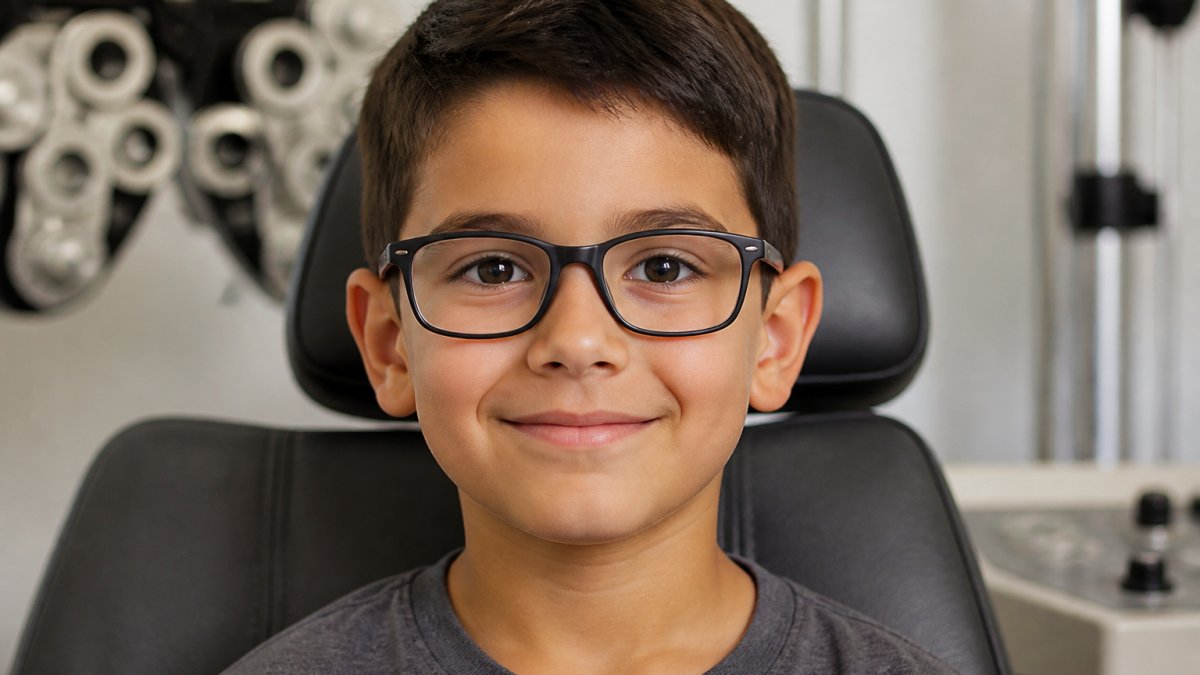
To find your child's ideal frame width, measure the distance across their face from the outer corner of one eye to the outer corner of the other eye, then add 2-4 millimeters for comfort. This measurement should fall within the frame width listed on the product label.
Children's faces grow quickly. A frame that fits perfectly at one age may feel tight later.
Bridge Fit and Nose Support
The bridge is the part of the frame that sits directly on the nose bridge. A proper bridge fit means the frame rests evenly across the nose without gaps or pressure points.
When the bridge is too wide, it creates gaps between the frame and the nose. Your child's glasses will slip down constantly, especially during sports or active play.
Test bridge fit by having your child wear the glasses and gently push them up on their nose. If they slide back down immediately without any resistance, the bridge is too wide.
Temple Length and Ear Fit
Temple length is measured from the hinge (where the temple arm connects to the front of the frame) to the end of the temple arm. The correct length ensures the glasses sit securely behind the ears without sliding or pinching.
To measure your child's temple length, ask them to look straight ahead, then measure from the outer corner of their eye to just behind their ear. The temple should reach this point without extending past it.
Temples that are too short will pull the frame forward and won't stay in place during movement.
Best Frame Shapes for Kids: Finding What Suits Their Face
Frame shape should complement your child's face shape while providing functional fit. Round faces benefit from angular frames that add definition.
Beyond face shape, consider your child's involvement in the frame selection. Research shows that children who choose their own frames are significantly more likely to wear them consistently.
Popular frame shapes for children include full-rim frames, which offer maximum durability and style range.
Our optometrists can help match frame shapes to your child's face during a comprehensive eye exam, ensuring both style and fit work together.
Durable Glasses for Kids: Materials That Survive Active Play
Plastic and Acetate Frames
Plastic frames, particularly acetate-based frames, are the most popular choice for children's eyewear. Acetate is lightweight, hypoallergenic, and available in virtually any color or pattern.
Flexible plastic frames are specifically designed for active children. These frames bend slightly without breaking, which means they survive the inevitable drops and impacts of childhood.
The main drawback of plastic frames is that they're more prone to scratching than metal. Teach your child to store glasses in a protective case and clean them with a soft cloth, not rough materials.
Metal and Flexible Frames
Metal frames, typically stainless steel or titanium alloys, offer durability and a more sophisticated look that appeals to older children and teenagers. Stainless steel is affordable and corrosion-resistant. Titanium is lighter and hypoallergenic, making it ideal for children with sensitive skin.
Flexible metal frames combine the durability of metal with the flexibility of plastic. They bend under pressure and return to shape, making them excellent for very active children or those with a history of breaking frames. Flexible frames can offer enhanced durability.
Lens Materials for Impact Resistance
Polycarbonate lenses are the standard for children's glasses. This plastic material is impact-resistant and significantly stronger than standard glass or plastic lenses. Polycarbonate absorbs impact energy rather than shattering, making it the safest choice for active children.
High-index lenses are thinner and lighter than standard plastic, which matters for children with stronger prescriptions. A child with a strong prescription will appreciate the reduced weight and less visible lens thickness. High-index lenses can improve comfort for all-day wear.
Trivex lenses offer similar benefits to polycarbonate with slightly better optical clarity. They're also impact-resistant and lightweight.
Glasses for Active Children: Sports and Play Considerations
Active children need glasses that stay in place during movement and survive impact. For sports-specific needs, consider frames with adjustable nose pieces and temple arms that grip the head securely.
Children playing contact sports or high-impact activities benefit from polycarbonate lenses paired with flexible frames. This combination absorbs impact and flexes under pressure instead of breaking.
For school-age children, durability matters as much as style. A frame that survives a fall from a desk or a collision on the playground saves you money and keeps your child's vision correction consistent.
At-Home Fit Checklist: Measurable Steps to Verify Comfort
Before you buy, use this checklist to verify that stylish frames for kids will actually work for your child:
- Frame width test: Measure face width and confirm frame width is within 2-4 millimeters of that measurement
- Bridge alignment: Have your child wear frames and check that the bridge sits evenly on the nose without gaps or pressure
- Push-up test: Push frames up gently; they should stay in place for 3-5 seconds before sliding
- Temple fit: Confirm temples reach just behind the ears without extending past or pulling short
- Pressure check: Have your child wear frames for 10 minutes and look for red marks on the nose or temples
- Movement test: Have your child move their head side to side and up and down; frames should stay centered
- Comfort confirmation: Ask your child directly if anything feels tight, loose, or uncomfortable
If any test fails, the frame doesn't fit properly regardless of how stylish it looks. A frame that doesn't pass this checklist will either be ignored by your child or cause discomfort that leads to inconsistent wear.
Prescription Lenses and Frame Pairing: What Works Together
The relationship between lens prescription strength and frame choice is often overlooked. Children with stronger prescriptions need frames that work with lens thickness and weight.
Stronger prescriptions result in thicker lenses, which add weight to the frame. Lightweight frame materials like titanium or flexible plastic become more important as prescription strength increases.
High-index or Trivex lenses paired with frames designed for thinner lenses create a better visual experience.
Before selecting stylish frames for kids, discuss your child's prescription strength with your optometrist. Annual comprehensive eye exams ensure your child's prescription is current and that frame and lens choices work together for optimal vision correction and comfort.
Frames with adjustable nose pieces and flexible temples accommodate prescription changes better than fixed frames.
Choosing stylish frames for kids involves more than picking a color your child likes. Our optometrists take time to ensure frames fit properly and that you understand how lens materials and frame durability affect long-term value. Schedule Now for a comprehensive eye exam where we'll help you select frames that combine style with genuine fit and durability.
Frequently Asked Questions
How do I know if stylish frames for kids are the right size?
Properly fitted stylish frames for kids should sit evenly on the nose bridge without sliding down, with the top of the frame aligned with the eyebrows and the bottom of the lens just above the cheekbones. The temples should curve gently over the ears without pinching or leaving marks. A simple test: if you can fit one finger between the temple and your child's head, the fit is correct. Check this fit every few months, as children's faces grow quickly.
What's the best way to measure kids' glasses size guide dimensions at home?
Measure three key areas: frame width (the total width across the front from the outermost point of one temple to the other), bridge width (the narrow part that sits on the nose), and temple length (the arm length from the hinge to the ear tip). Many online retailers provide a sizing chart; compare your child's measurements to that chart before ordering. If unsure, ask an optometrist to measure during an eye exam.
Are plastic or metal frames more durable for active kids?
Both can be durable, but they serve different needs. Plastic and acetate frames are lightweight, flexible, and less likely to bend out of shape during active play, making them ideal for sports. Metal frames offer a sleeker look and can be adjusted more easily, but they may bend if dropped or sat on. Flexible plastic frames with reinforced hinges often provide the best durability for active children. The lens material matters too: polycarbonate or Trivex lenses are more impact-resistant than standard plastic.
How often should my child's glasses be checked for proper fit?
Check the fit regularly or whenever you notice your child pushing glasses up frequently, complaining of discomfort, or if the frames appear loose or misaligned. Children's faces change rapidly, so a frame that fit perfectly recently may need adjustment. See Clearly Florida can verify fit during routine exams and make minor corrections.
What frame shapes look best on different face shapes for kids?
Round faces suit angular frames like rectangular or square shapes to add definition. Square or wide faces work well with rounded or oval frames to soften features. Oval faces are versatile and suit most frame shapes. Narrow faces benefit from frames with width and detail to add balance. Let your child try several shapes during a fitting; the best frame is one that feels comfortable and that your child will actually wear. Involve them in the choice so they feel ownership of their new stylish frames for kids.