 ultimate-guide
Pediatric Eye Exam Cost Without Insurance: 2026 Guide
Table of Contents
- Pediatric Eye Exam Cost Without Insurance: What Parents Actually Pay
- What Is Included in a Comprehensive Pediatric Eye Exam
- What to Expect at a Child's First Eye Exam
- How Long Does a Pediatric Eye Exam Take?
- Low Cost Eye Exams for Children: Programs and Resources
- Hidden Costs of Pediatric Eye Care Without Insurance
- How to Choose a Provider for Your Child's Eye Exam
- Conclusion: Next Steps for Your Child's Vision Care
- Frequently Asked Questions
Last Updated: October 3, 2026
Pediatric Eye Exam Cost Without Insurance: What Parents Actually Pay
Most parents assume a pediatric eye exam without insurance costs a fortune. It usually doesn't. The bigger surprise is how much the bill swings depending on where you go and what gets done.
What we can do is show you exactly what drives the price, what's usually included, and where to find low cost eye exams for children if money is tight.
What Is Included in a Comprehensive Pediatric Eye Exam
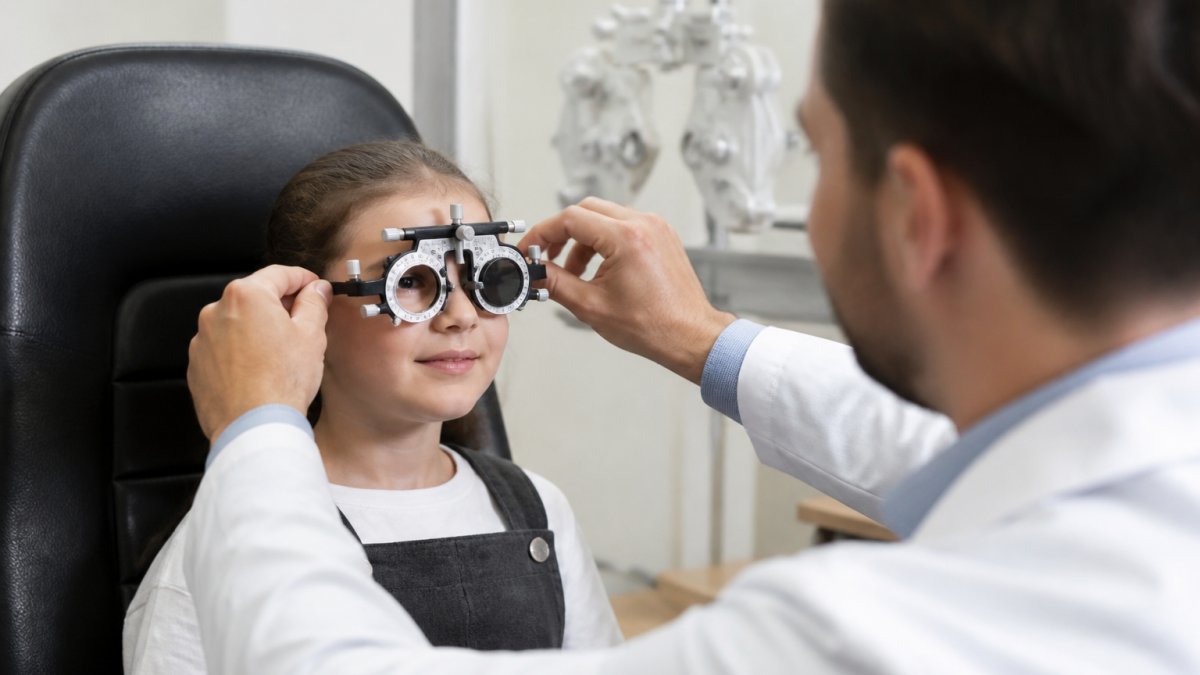
A comprehensive pediatric eye exam is a full evaluation of your child's vision and eye health, not just a wall chart reading. It combines a case history, visual acuity testing, refraction, binocular vision checks, and a dilated eye health assessment.
Here's what that looks like in practice:
- Case history: questions about squinting, headaches, reading trouble, and family history of eye disease
- Visual acuity: how clearly your child sees at distance and near, using age-appropriate symbols or letters
- Refraction: measuring the exact prescription needed for prescription glasses
- Binocular and focusing tests: how well the eyes work together as a team
- Eye health evaluation: checking the retina, optic nerve, and internal structures, often with dilation
- Diagnostic testing: additional scans or photos if the optometrist finds something worth a closer look
That last point matters. A "free" screening rarely includes refraction or dilation, which is why the same child can pass a school screening and still need glasses. The American Optometric Association's guidance on comprehensive eye exams explains the difference between a screening and a full exam.
What to Expect at a Child's First Eye Exam
A child's first eye exam is usually calm, short, and play-based. Your optometrist will spend most of the visit watching how your child tracks objects, responds to light, and uses both eyes together.
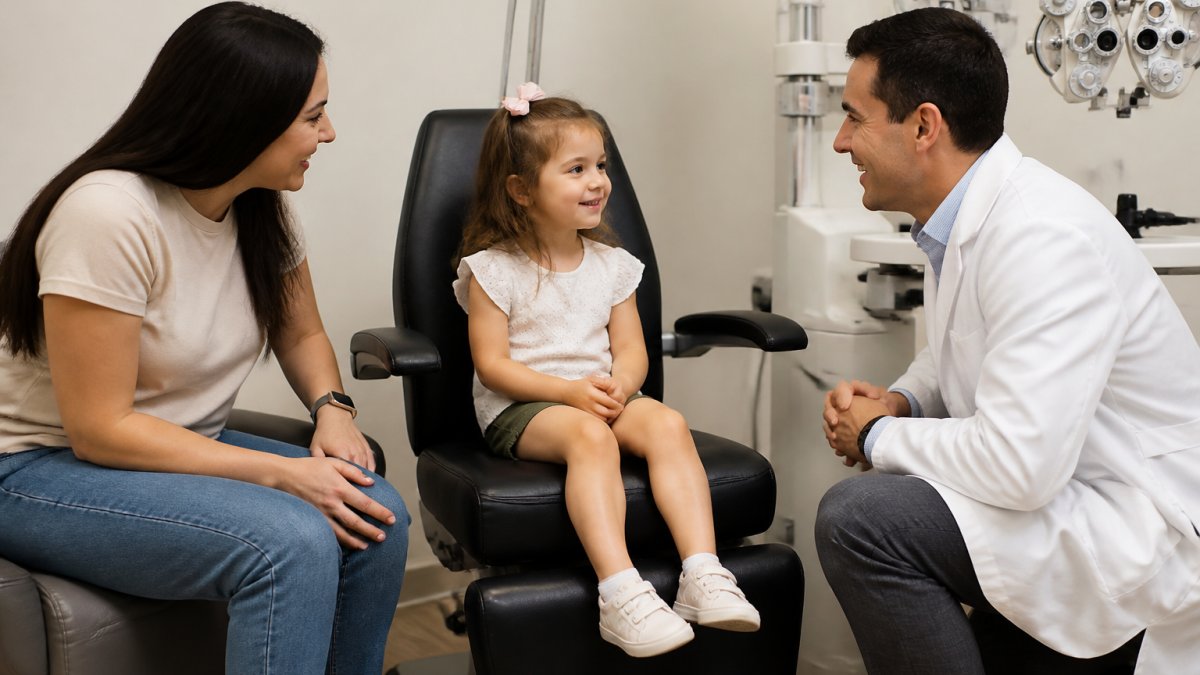
For infants and toddlers, the exam leans on observation rather than instruction: a light response check, a cover test to see how the eyes align, and a look at internal eye structures.
A few things that help:
- Bring a favorite small toy or snack for younger children
- Tell your child the lights are bright but not painful
- Arrive ten minutes early so they can settle in
- Bring any prior prescriptions or screening results
How Long Does a Pediatric Eye Exam Take?
A pediatric eye exam takes about 30 to 60 minutes for a routine visit. First exams and visits with dilation run longer, closer to the full hour.
Dilation is the main variable. The drops take roughly 20 to 30 minutes to work, and your child's pupils may stay enlarged for several hours. Plan a slower afternoon and bring sunglasses for the ride home.
If the optometrist finds something needing diagnostic testing or follow-up, add time for that conversation. Ask when you book whether dilation is likely so you can schedule around it.
Low Cost Eye Exams for Children: Programs and Resources
Low cost eye exams for children exist in most communities, and many families qualify without realizing it. The trick is knowing where to look, and what to ask once you find a program.
Start with these options:
- Community health centers: many offer sliding scale fees based on household income
- School-based vision programs: free vision screening and, in some districts, free or reduced-cost follow-up exams
- Nonprofit vision organizations: several national groups fund exams and glasses for children who qualify
- Optometry school clinics: supervised student clinics often charge reduced rates
- Local health department programs: some counties run vision health initiatives for kids
How Sliding Scale Fees Actually Work
A sliding scale means the fee you pay is set by household income and family size, usually measured against federal poverty guidelines. You bring proof of income, recent pay stubs, a prior-year tax return, or a benefits letter, and the clinic assigns a discount tier.
The practical move is to call before you book and ask three questions directly:
- Do you offer a sliding scale, and what income documentation do you require?
- What is the fee at my income level for a full exam, not just a screening?
- Does that fee include dilation and refraction, or are those billed separately?
A common pattern: the base exam is discounted but add-ons like dilation or diagnostic imaging are not, so the all-in number can still surprise you. Get the estimate in writing.
Accessing School-Based Vision Program Follow-Ups
School vision screenings are nearly universal, but the screening itself is not a diagnosis, and the follow-up exam is where families without insurance often fall through the cracks.
If your child failed a school screening, contact the school nurse or the district's health services office directly and ask:
- Does the district fund follow-up exams for students who fail screening?
- Is there a list of participating providers, and do any offer the exam at no cost?
- What documentation do I need to qualify?
Some districts partner with mobile vision clinics that come to the school; others issue a voucher for a participating optometrist. Either way, the follow-up is time-limited, so act quickly.
The CDC's information on children's vision screening is a good starting point for understanding what screenings catch and what they miss.
Hidden Costs of Pediatric Eye Care Without Insurance
The exam fee is only part of the picture. Parents paying cash are often surprised by costs that show up after the visit, usually the add-ons and the follow-up, not the exam itself.
Watch for these:
- Dilation and diagnostic testing: sometimes billed separately from the base exam
- Prescription glasses: frames and lenses are separate, and kids' lenses need impact-resistant materials
- Contact lens fittings: a separate service with its own fee and training time
- Follow-up care: rechecks for prescription changes or eye health monitoring
- Replacement lenses: kids scratch and break lenses, and that's not usually covered
What Each Add-On Actually Costs You
The base exam fee is the headline; the add-ons are the fine print. Here's how the structure typically breaks down:
- Dilation: often bundled into a comprehensive exam, but some practices bill it as a separate line item. Ask whether it's included before you book.
- Refraction: the test that produces a glasses prescription. Some practices fold it into the exam; others charge it separately, especially if the visit was billed as a medical exam rather than a vision exam.
- Diagnostic imaging: retinal photos, OCT scans, or visual field testing are usually triggered by a specific finding and billed on top of the exam. These are the costs most likely to blindside a cash-paying parent.
- Contact lens fitting: a distinct service from the exam, with its own fee that covers the fitting, training, and often a trial pair. It is rarely included in a routine exam.
- Glasses: frames and lenses are priced separately, and children's lenses typically require impact-resistant material (polycarbonate or Trivex) that costs more than standard lenses. A second pair or replacement lenses after a break is almost never covered.
A common pattern is that the exam is the smallest line on the bill. Ask for an itemized estimate that lists every possible add-on and its price before you schedule.
Using HSAs and FSAs to Pay Pre-Tax
One angle many families overlook: tax-advantaged accounts. If you have a flexible spending account (FSA) or health savings account (HSA) through an employer, vision care for dependents is generally eligible. You can pay for the exam, glasses, contacts, and related services with pre-tax dollars, effectively a discount equal to your marginal tax rate.
How to make it work:
- Confirm eligibility: routine vision exams, prescription glasses, contact lenses, and medically necessary eye care are typically eligible. Over-the-counter reading glasses usually are not.
- Check your FSA deadline: FSAs are often use-it-or-lose-it, so schedule the exam before the plan year ends if you have funds to spend.
- Keep receipts: you may need to substantiate the expense, especially for an HSA, which can be audited years later.
- Use the right card: if your plan issues a benefits card, confirm the provider accepts it; otherwise pay out of pocket and submit for reimbursement.
Check the IRS guidance on medical and dental expenses for how vision costs are treated and what documentation you need to keep.
| Cost Category | Usually Bundled in Exam? | Ask Before You Book |
|---|---|---|
| Office visit | Yes | Is the base fee all-inclusive? |
| Dilation | Sometimes | Is there a separate charge? |
| Refraction | Sometimes | Included or added? |
| Diagnostic testing | No | What triggers it, and what does it cost? |
| Glasses or contacts | No | What's the frame and lens range? |
| Follow-up visit | No | Is the recheck free or billed? |
How to Choose a Provider for Your Child's Eye Exam
Choosing a provider comes down to three things: scope of care, transparency, and fit for your child. A pediatric optometrist handles routine exams, prescriptions, and many eye health conditions.
Ask these questions before you book:
- Does the exam include dilation and refraction?
- What's the total out-of-pocket estimate for a cash-paying patient?
- Do you submit insurance claims on my behalf if I use out-of-network benefits?
- How do you handle follow-up care and rechecks?
- What's your approach for kids who are nervous or have trouble sitting still?
If you're using a health insurance plan, confirm whether the provider is in-network before the visit. Out-of-network coverage varies widely, and a quick call to your plan can prevent a surprise bill.
At See Clearly Florida, we work with families across Manatee County who want flexibility in how they use their vision benefits.
Conclusion: Next Steps for Your Child's Vision Care
The real challenge isn't finding a number online. It's finding a provider who tells you the full cost up front, includes what actually matters in the exam, and treats your child like a person.
See Clearly Florida offers comprehensive eye exams and contact lens fittings for kids and adults, personalized care recommendations based on lifestyle and eye health, and help maximizing your vision benefits with flexibility that isn't limited to specific insurance networks. We also submit insurance claims on your behalf and give you convenient access to records and prescriptions through our patient portal.
Schedule now with See Clearly Florida.
Frequently Asked Questions
How much is a child's eye exam without insurance?
The pediatric eye exam cost without insurance varies by provider and location. Comprehensive exams typically range from $75 to $250, while a basic vision screening may cost less. Factors include whether dilation, refraction, or diagnostic testing is needed. For an accurate estimate, contact the provider directly and ask what is included in the fee.
Are there low-cost or free eye exam programs for children?
Yes. Low cost eye exams for children are available through school-based vision programs, community health centers, and nonprofit organizations. Some programs offer free vision screenings and follow-up care for eligible families. Eligibility requirements vary, so contact your child's school nurse or local health department to find options in your area.
What is included in a comprehensive pediatric eye exam?
A comprehensive eye exam for a child includes a review of health history, visual acuity testing, refraction to check for nearsightedness or farsightedness, eye alignment and movement assessment, and an evaluation of eye health. Dilation may be used to examine the retina and optic nerve. The specific tests depend on the child's age and symptoms.
At what age should a child have their first eye exam?
The American Optometric Association recommends a first eye exam at 6 months of age, then again at age 3, and before starting school. After that, routine examinations every one to two years are typical unless a doctor advises more frequent visits. Early detection of vision problems supports learning and development.
Does the cost of a pediatric eye exam vary by location?
Yes. The cost can differ based on provider location, whether the practice is in a rural or urban area, and the type of provider. Out-of-pocket rates also depend on the practice's fee structure. Calling several offices and asking for a self-pay price is the most reliable way to compare.