 listicle
Benefits of Annual Comprehensive Eye Exams
Table of Contents
- Why Annual Comprehensive Eye Exams Matter for Your Vision
- What Does a Comprehensive Eye Exam Include
- Comprehensive Eye Exam vs Routine Eye Exam
- Early Detection of Eye Disease and Vision Loss
- How Often Should You Get an Eye Exam
- How Long Does an Eye Exam Take
- Preserving Your Vision and Preventing Long-Term Eye Damage
- Frequently Asked Questions
Last Updated: October 12, 2026
Why Annual Comprehensive Eye Exams Matter for Your Vision
A comprehensive eye exam is far more than a simple vision check.
Many people skip eye exams when their vision feels fine. That's a critical mistake. Eye diseases like glaucoma, macular degeneration, and diabetic retinopathy often develop without symptoms. By the time you notice vision changes, damage may already be permanent.
Beyond eye disease, your eye doctor can spot signs of hypertension, high cholesterol, and diabetes during a routine exam. Blood vessels in the retina are among the first places these systemic conditions show up.
What Does a Comprehensive Eye Exam Include
A comprehensive eye exam is structured to evaluate every aspect of your eye health. It takes longer than a routine exam, typically 45 minutes to an hour, and involves multiple tests and measurements. Here's what happens during each stage.
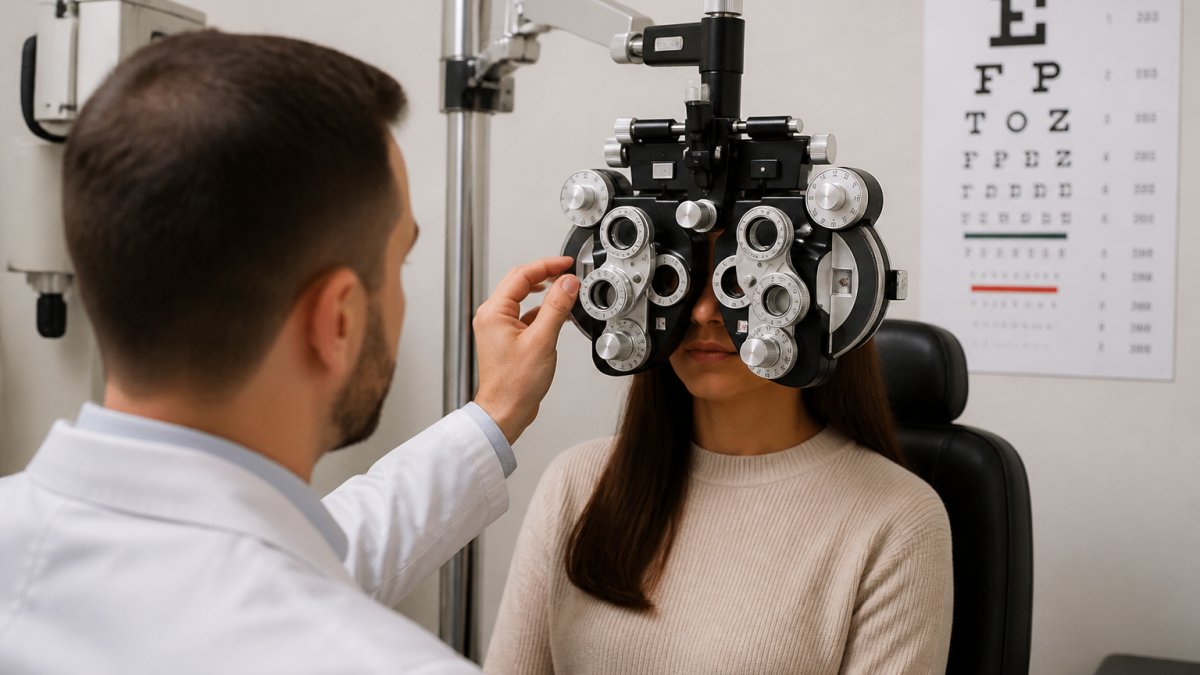
Visual Acuity and Refraction Testing
The exam starts with a vision assessment. You'll read letters on a chart at a distance to measure your visual acuity.
This test answers a simple question: what prescription gives you the clearest vision? Your prescription changes over time, especially as you age. Updating it annually ensures you're seeing at your best and can catch presbyopia (age-related difficulty focusing on near objects) before it affects your daily life.
Eye Pressure and Glaucoma Screening
Glaucoma is often called the "silent thief of sight" because it typically causes no symptoms until significant damage occurs (Understanding Glaucoma: Symptoms, Causes, Diagnosis, Treatment). During your exam, your eye doctor measures your intraocular pressure using a tonometer.
High eye pressure is a major risk factor for glaucoma. If your pressure is elevated, your doctor may recommend additional testing or more frequent monitoring. Catching glaucoma early, before vision loss begins, is the difference between preserving your sight and losing it.
Dilated Retinal Examination
This is where a comprehensive eye exam truly sets itself apart from a routine vision check. Your eye doctor places dilating drops in your eyes, which widen your pupils.
During this examination, your doctor looks for signs of macular degeneration, diabetic retinopathy, cataracts, and other conditions. The dilated exam takes about 20 minutes, and your vision will be blurry and light-sensitive for a few hours afterward, so plan accordingly. The insight gained is invaluable.
Comprehensive Eye Exam vs Routine Eye Exam
The terms get used interchangeably, but they're not the same thing. Understanding the difference matters for your health and your wallet.
A routine eye exam focuses on updating your prescription and checking for obvious problems.
A comprehensive eye exam goes deeper.
For most people, annual comprehensive exams are the right choice. If you have risk factors for eye disease, family history of glaucoma, diabetes, hypertension, or age over 60, comprehensive exams become even more important.
Early Detection of Eye Disease and Vision Loss
This is where annual comprehensive eye exams prove their worth. Early detection of eye disease transforms outcomes.
Detecting Glaucoma, Macular Degeneration, and Cataracts
Glaucoma damages your optic nerve gradually. In early stages, you feel nothing. Your peripheral vision narrows without you noticing. By the time symptoms appear, irreversible damage has occurred.
Macular degeneration affects the central part of your retina responsible for sharp vision. Age-related macular degeneration (AMD) is a leading cause of vision loss in older adults (Age-Related Macular Degeneration (AMD)).
Cataracts cloud your lens gradually. A comprehensive exam spots cataracts in their early stages, before they significantly affect your vision.
Identifying Diabetic Retinopathy and Hypertension
If you have diabetes, your eye exam is a critical part of managing your condition (the CDC). Diabetic retinopathy, damage to blood vessels in the retina caused by high blood sugar, often shows no symptoms until it's advanced.
Similarly, high blood pressure damages retinal blood vessels in characteristic ways. Your eye doctor can spot these changes during a dilated exam, sometimes identifying hypertension before your primary care physician does. This finding can prompt medical evaluation and treatment that protects not just your eyes but your heart and brain.
How Often Should You Get an Eye Exam
The honest answer is that there is no single schedule that fits everyone. Frequency should be personalized to your age, health history, family history, and current risk factors. The broad age-based guidance below is a starting point, not a prescription, your eye doctor may recommend a different interval after reviewing your individual situation.
General guidance by age and risk
For healthy adults under 40 with no symptoms and no risk factors, an exam every 1-2 years is typically adequate.
Adults aged 40-64 should generally have a comprehensive exam every 1-2 years. This is the window when presbyopia emerges and when the earliest signs of glaucoma, macular degeneration, and diabetic changes become detectable.
Adults 65 and older should have a comprehensive exam every year. The incidence of age-related eye disease rises sharply in this group, and early detection is the single biggest factor in preserving vision.
When a clinician may recommend a different interval
A personalized schedule can move in either direction. Your eye doctor may recommend more frequent visits, sometimes every 3-6 months, if you have:
- Diagnosed glaucoma, macular degeneration, or diabetic retinopathy that needs monitoring
- Diabetes, which raises retinopathy risk and often warrants at least an annual dilated exam
- A family history of glaucoma or other hereditary eye disease
- A prescription that is changing quickly, or symptoms such as flashes, floaters, or double vision
- Certain medications, including long-term steroid use, that can raise eye pressure or affect the lens
In some lower-risk cases, a clinician may extend the interval beyond a year. That decision should come from your eye doctor after an exam, not from a general rule of thumb.
Why the interval matters more than the label
The goal is not to hit a calendar date, it is to catch problems while they are still treatable. Glaucoma, diabetic retinopathy, and macular degeneration can progress silently between visits. A schedule that is too loose can let irreversible damage accumulate; a schedule that is too tight adds cost and time without benefit. The right interval is the one your eye doctor sets based on what your exam actually shows.
How Long Does an Eye Exam Take
A routine vision check typically takes 20-30 minutes. A comprehensive eye exam usually runs 45 minutes to an hour, and longer if additional testing such as visual field testing, retinal imaging, or a glaucoma workup is needed. The dilated portion alone adds about 20-30 minutes.
What to bring and how to prepare
A little preparation makes the visit smoother and the results more useful:
- Your current glasses or contacts, plus any prescription information you have
- A list of medications and supplements, including dosages, some affect eye pressure, tear production, or the lens
- Your family history of eye disease, diabetes, high blood pressure, or glaucoma
- Your vision insurance card and a photo ID, so coverage can be verified before the exam
- A list of questions or symptoms you want to discuss, such as headaches, eye strain, or blurry vision at certain distances
If you wear contact lenses, ask whether you should leave them out before the appointment. Some exams require you to be out of contacts for a period beforehand so your cornea returns to its natural shape.
Dilation: what to expect and how to plan
If your exam includes dilation, drops are placed in each eye to widen the pupil. This lets your eye doctor see the retina, optic nerve, and blood vessels clearly. The drops take about 15-30 minutes to work, and your pupils stay dilated for roughly 3-4 hours afterward.
During that window, your near vision will be blurry and you will be sensitive to light. You generally should not drive yourself home. Plan one of the following:
- Bring a friend or family member who can drive
- Use a rideshare or taxi
- Schedule the appointment for a day when you do not need to drive or do close work afterward
Bring sunglasses, even on a cloudy day, dilated eyes are uncomfortable in bright light. If you have an important meeting, detailed computer work, or a driving-heavy afternoon planned, schedule the exam for a different day.
Questions worth asking during the visit
A comprehensive exam is also a conversation. Consider asking:
- What did each test measure, and were the results normal?
- Did you see any signs that need follow-up, and if so, what is the next step?
- When should I come back, given my age and risk factors?
- Are there changes to my prescription, and how do they compare to last year?
- Are there lifestyle changes that would help protect my vision?
Why the time investment is worth it
A comprehensive exam takes longer than a quick vision screening because it looks at more than your prescription. It evaluates the health of the retina, optic nerve, and blood vessels, and it can flag conditions that have no early symptoms. The extra 20-30 minutes is the difference between checking your vision and checking your eye health.
Preserving Your Vision and Preventing Long-Term Eye Damage
Annual comprehensive eye exams are your frontline defense against vision loss. They catch problems early, when treatment is most effective. They monitor existing conditions to prevent progression.
Beyond exams, protecting your vision means managing risk factors. If you have diabetes, keep your blood sugar controlled. If you have hypertension, take your medications and monitor your blood pressure.
But none of these steps replace regular comprehensive eye exams. Your eyes are windows into your overall health.
See Clearly Florida is committed to helping you preserve your vision through personalized, comprehensive eye care.
Frequently Asked Questions
Should eye exams be yearly?
For most adults, annual comprehensive eye exams are recommended to monitor vision changes, detect early signs of eye disease, and identify systemic health conditions like diabetes and hypertension. Adults over 65, those with existing eye conditions, or individuals with family history of glaucoma or macular degeneration may benefit from more frequent exams. Your eye doctor can recommend a schedule based on your individual risk factors and eye health.
What can a comprehensive eye exam detect besides vision problems?
A comprehensive eye exam can reveal signs of systemic health conditions including diabetes, high blood pressure, high cholesterol, and even certain cancers. The eye doctor examines blood vessels in the retina, which can show damage from diabetes or hypertension. Early detection of these conditions during an eye exam can prompt you to seek medical attention and begin treatment before serious complications develop.
What is the difference between a comprehensive eye exam and a routine vision exam?
A routine vision exam typically focuses on measuring visual acuity and updating your prescription for glasses or contacts. A comprehensive eye exam includes all of that plus dilated retinal examination, eye pressure testing for glaucoma screening, assessment of eye health, and evaluation of peripheral vision and depth perception. Comprehensive exams take longer and provide a complete picture of your eye health and systemic health indicators.
How long does a comprehensive eye exam take?
A comprehensive eye exam typically takes 45 minutes to an hour, depending on your eye health history and whether additional testing is needed. The time includes visual acuity testing, refraction, eye pressure measurement, dilated eye examination, and discussion of findings. If you have existing eye conditions or complex vision needs, your exam may take longer. Arriving 10-15 minutes early for intake paperwork is recommended.
Annual comprehensive eye exams are one of the most effective preventive health measures available. They detect eye disease early, track changes in your vision, and reveal signs of systemic health conditions. Schedule your comprehensive eye exam with See Clearly Florida today and take control of your eye health. Our team will maximize your vision benefits with flexible, personalized care tailored to your unique needs. Schedule Now