 Comparison
7 Alternatives to Traditional Glasses for Kids
Quick Summary
Alternatives to traditional glasses for kids include standard soft contact lenses, orthokeratology (overnight Ortho-K lenses), myopia-control soft lenses, and prescription sports goggles. Each suits different ages and routines, and some are designed to slow nearsightedness rather than only correct it. Your eye doctor can help match an option to your child.
- Glasses, contacts, and Ortho-K all correct vision, but only some options are designed to slow nearsightedness progression.
- Contact lenses usually suit older, mature children who can handle lenses and follow a cleaning routine, commonly from age 10.
- Ortho-K lenses are worn overnight and give clear daytime vision, but they require strict cleaning and regular follow-up.
- Myopia-control treatments are not a cure and do not reverse existing nearsightedness.
- Compare total yearly cost, including fittings, replacements, and follow-up visits, not just the first purchase.
Table of Contents
- Why Parents Look for Alternatives to Traditional Glasses
- Standard Glasses vs. Other Options: A Side-by-Side Comparison
- Contact Lenses for Kids: Age, Maturity and Hygiene Requirements
- Myopia Control for Children: What Treatments Can and Cannot Do
- Orthokeratology for Kids: Overnight Lenses Explained
- Prescription Sports Goggles for Children and Active Kids
- Total Cost, Insurance and Ways to Lower Your Child's Eyewear Bill
- Booking Your Child's Eye Exam to Choose the Right Option
- Frequently Asked Questions
Why Parents Look for Alternatives to Traditional Glasses
Many parents hear "your child needs glasses" and immediately wonder what alternatives to traditional glasses are possible. Some children find glasses uncomfortable, break them often, or simply refuse to wear them. Others are active in sports, or their nearsightedness is progressing quickly enough that parents want to know about myopia control. Knowing the options helps families have a more informed conversation with an eye doctor. (Source: the American Academy of Ophthalmology's guidelines)
It helps to separate two goals. Vision correction makes blurry distance vision clear, and glasses, contact lenses, and orthokeratology all do that. Myopia control aims to slow how fast nearsightedness gets worse, and only some treatments are designed for that purpose. Keeping these goals apart makes it easier to judge any option fairly.
A pediatric visit typically starts by asking what is driving the question: comfort, lifestyle, progression, or cost. The answer shapes which options are worth discussing.
Standard Glasses vs. Other Options: A Side-by-Side Comparison
Most parents arrive at this question with two different goals mixed together, and separating them is the first step toward a fair comparison. Vision correction makes blurry distance vision clear. Myopia control aims to slow how quickly nearsightedness gets worse. Glasses, standard contact lenses, and orthokeratology all correct vision; only some options are designed to also slow progression. A treatment that does one job well may not do the other, and no single option wins on every measure.
The table below compares the main alternatives on the factors families actually weigh: who the option tends to suit, what the daily routine demands, the main benefit, and the main trade-off. Treat it as a conversation starter with your eye doctor, not a prescription.
| Option | Typical age fit | Daily effort | Vision correction? | Myopia control? | Main advantage | Main drawback |
|---|---|---|---|---|---|---|
| Standard glasses | Any age, including toddlers | Low | Yes | No (standard single-vision) | Simple, safe, easy to inspect and replace | Can break, slip, or fog during play |
| Soft contact lenses | Usually older, mature children (commonly 10+) | Moderate to high | Yes | Some specialty designs | No frames to wear; good for sports | Hygiene demands; infection risk if mishandled |
| Orthokeratology (Ortho-K) | Typically school-age and older | Low once fitted, but nightly | Yes (daytime) | Often used as part of a myopia-control plan | Clear vision during the day without glasses | Overnight routine; careful fitting and follow-up |
| Myopia-control soft lenses | Usually school-age children | Moderate | Yes | Yes (specialty designs) | Combines correction with progression control | Higher fitting cost; not a cure |
| Prescription sports goggles | Active children of most ages | Low | Yes | No | Impact protection during play | Not intended for everyday wear |
Age and maturity guidance. Toddlers and preschoolers are almost always best served by standard glasses, because they cannot reliably handle lenses and because frame fit and safety matter more than cosmetics at that age.
Safety and hygiene requirements. Contact lenses are medical devices, and the central safety issue is handling (the FDA). Lenses must be inserted, removed, and cleaned exactly as directed, kept away from tap water, and never worn beyond the prescribed schedule, including sleeping in lenses labeled for daily wear only (the CDC).
When an option may not be appropriate. Contacts and Ortho-K are generally not first-line choices for very young children, for children who rub their eyes frequently, or for families who cannot commit to follow-up visits. Myopia-control treatments are not a cure and do not reverse existing nearsightedness. A child with certain eye health conditions may be steered away from lenses entirely.
Compare these options with your eye doctor based on your child's age, prescription, maturity, and daily routine. A choice that suits a 9-year-old soccer player may not suit a 6-year-old who has never handled contact lenses, and the right answer can change as your child grows.
Contact Lenses for Kids: Age, Maturity and Hygiene Requirements
Contact lenses can work well for children, but they are not a default upgrade from glasses. Most eye care professionals look for a child who can handle lenses independently, follow a cleaning routine, and recognize when something feels wrong. Maturity matters as much as age, so some children are ready at 10 while others are not ready at 14.
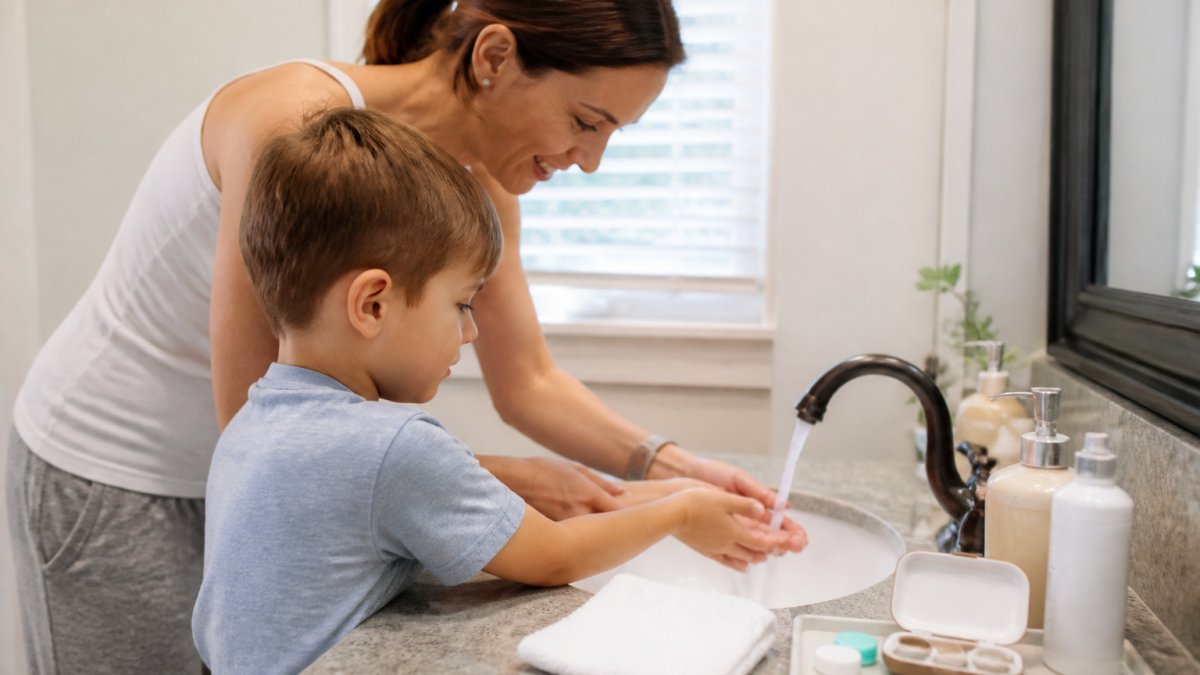
Hygiene is the central safety issue. Lenses must be inserted, removed, and cleaned exactly as directed, and they should never be worn beyond the prescribed schedule. A common mistake is letting lenses sleep in the eye when they are labeled for daily wear only. Watch out: a child who rubs eyes, tap water exposure, or missed cleaning steps raises the risk of infection, so frequent follow-up matters.
Myopia Control for Children: What Treatments Can and Cannot Do
Myopia control treatments are designed to slow the progression of nearsightedness, not to restore clear vision by themselves. Options can include specialty soft contact lenses, multifocal lens designs, and overnight orthokeratology. Eye care professionals measure progression over time, which is why regular checkups are part of the plan.
These treatments cannot reverse existing nearsightedness, and they do not eliminate the need for glasses or lenses during the day unless the specific option provides that correction. Families should also know that outdoor time is widely discussed as a helpful habit for children's eye health, though it should be treated as a supporting factor rather than a substitute for treatment.
Whether a treatment is worth the cost and effort depends on the child's progression rate, their age, and how well they tolerate the routine.
Evidence Quality and Realistic Expectations
Research on myopia control has grown, but results vary by treatment, age group, and study design. Some studies show a meaningful slowing of progression, while others show smaller effects, and not every child responds the same way. Ask your eye doctor which studies support a specific option and what results families should realistically expect.
Orthokeratology for Kids: Overnight Lenses Explained
Orthokeratology, often called Ortho-K, uses specially designed rigid lenses worn overnight. The lenses gently reshape the front surface of the cornea, so vision is clear during the day without glasses or daytime lenses. The effect is temporary, so wearing the lenses consistently is necessary to keep the benefit.
Ortho-K is generally considered for school-age children and older who can manage nightly insertion and removal. It requires careful fitting, regular follow-up, and strict cleaning. Some children also use it as part of a myopia control approach, but families should confirm the specific goal with their doctor.
Prescription Sports Goggles for Children and Active Kids
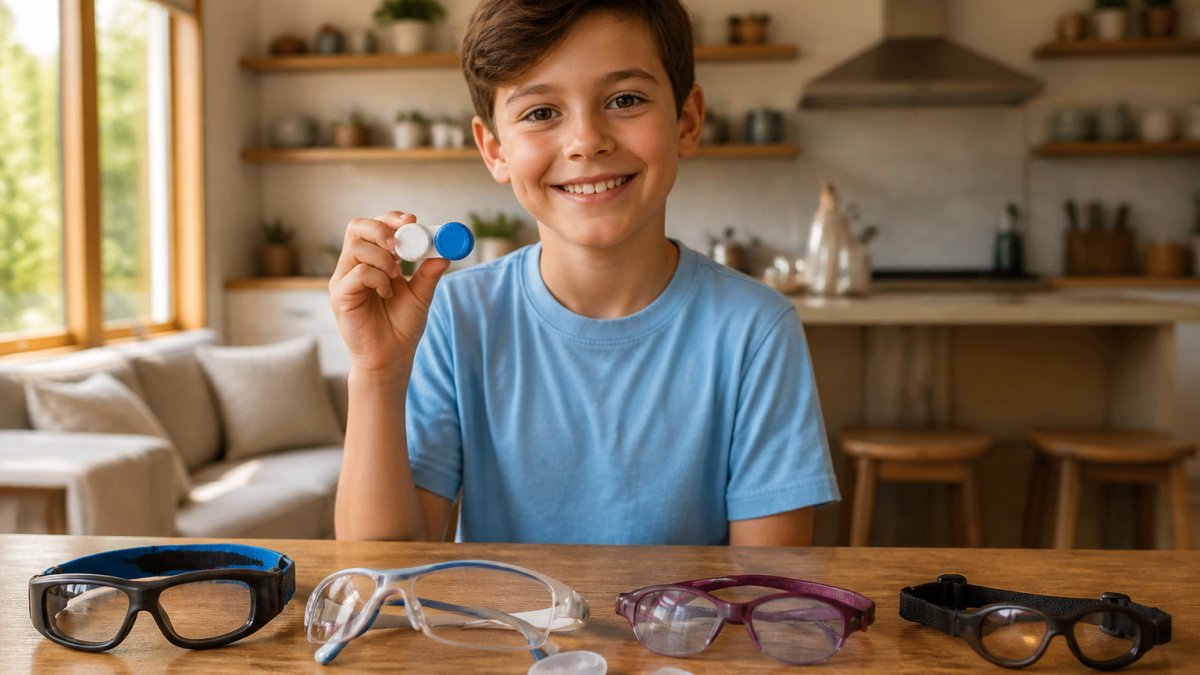
Prescription sports goggles are a practical option for children who play contact sports or spend long hours in active settings. They correct vision while providing impact protection, which matters for activities like basketball, soccer, and cycling. Lenses should meet recognized impact standards, and the frame should fit securely during movement.
Goggles are not designed for everyday wear, so most families keep a regular pair of glasses for school and home. Ask your provider whether the sports pair can match your child's current prescription and whether lens materials are appropriate for the activity.
Total Cost, Insurance and Ways to Lower Your Child's Eyewear Bill
Frame price is the number parents see first, but it is rarely the number that matters most. Total cost of ownership for children's eyewear includes the exam, the fitting, the lenses or devices, replacement supplies, follow-up visits, and the cost of breakage or loss. Comparing options on that full yearly figure, not the first purchase, gives a clearer picture of what a family will actually spend.
What drives cost for each option. Standard glasses are usually the least expensive upfront, but active children break or lose frames, so replacement lenses and frames add up over a year. Contact lenses carry fitting fees plus ongoing solution and replacement-lens costs, and a child who loses a lens needs a replacement quickly.
Insurance and vision plans. Coverage differs sharply by plan, and the differences matter more for specialty options than for standard glasses. Many vision plans cover a routine exam and a pair of standard frames and lenses more generously than they cover contact lens fittings or specialty myopia-control lenses. Some plans cover a contact lens fitting differently from a frame purchase, and some require prior authorization for specialty lenses.
Ways to lower the bill. A few practical levers help families manage the yearly cost:
- Use the plan's covered frame and lens benefit for the everyday pair, and reserve specialty spending for the option that adds the most value for your child.
- Ask about a second-pair or backup-pair discount if your child plays sports or is hard on frames.
- Choose impact-resistant lens materials appropriate for your child's age and activity, which can reduce breakage and replacement frequency.
- Bundle follow-up visits into the treatment plan so monitoring is scheduled rather than reactive.
- Ask your provider about any payment or savings options available for families without vision benefits.
Pricing for See Clearly Florida's services depends on the exam, the option chosen, and your benefits, so please visit our website or contact our office for a current quote.
Booking Your Child's Eye Exam to Choose the Right Option
The best next step is a comprehensive eye exam, because the right option depends on your child's prescription, eye health, and daily habits. Eye doctors can take time to explain each choice and recommend what fits your child's lifestyle. Bring a list of questions, your child's current glasses if they have them, and any notes about visual complaints or sports participation.
Ready to find out which options suit your child? Schedule a visit with an eye care professional to talk through the choices.
Frequently Asked Questions
What can kids use instead of traditional glasses?
Children who need vision correction have several options beyond standard glasses, including soft or specialty contact lenses, overnight orthokeratology lenses, and prescription sports goggles for active play. Each option suits different ages, activity levels and eye conditions. Glasses remain the simplest and most common choice for many kids. A pediatric eye exam is the only way to learn which option fits your child's prescription, eye health and maturity level.
Are contact lenses better than glasses for kids?
Contact lenses are not automatically better than glasses. They can suit children who play sports, dislike glasses or need certain treatments, but they require good hygiene, careful handling and consistent wear schedules. Many eye-care professionals assess a child's responsibility and ability to insert and remove lenses before recommending them. Glasses avoid those daily demands and carry less risk of eye infection. Discuss both options with your eye-care provider before deciding.
Are orthokeratology lenses safe for children?
Orthokeratology lenses are worn overnight and reshape the cornea temporarily, so vision is clear during the day without glasses. They are used in some children with nearsightedness, but they carry risks, including corneal infection, and require strict hygiene and regular follow-up visits. Safety depends on the child's eye health, the fit and the care routine. Ask an eye-care professional whether your child is a suitable candidate and what monitoring will be needed.
Can myopia control slow nearsightedness in children?
Some myopia-control approaches, such as certain specialty contact lenses, multifocal designs and prescription eye drops, may slow the progression of nearsightedness in some children, but results vary and the evidence differs by treatment. Outdoor time is also widely discussed as a supportive habit. No approach stops nearsightedness completely, and treatment usually requires ongoing checkups. Ask your eye-care provider which option, if any, is appropriate for your child and what realistic results to expect.